ASUU warns of nationwide shutdown of universities as negotiation with Tinubu govt stalls
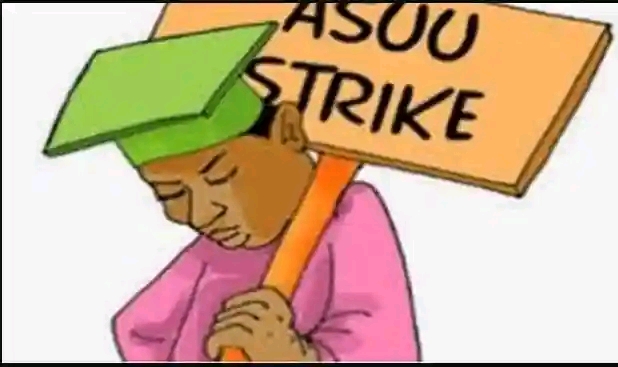
ASUU warns of nationwide shutdown of universities as negotiation with Tinubu govt stalls
The Academic Staff Union of Universities has warned that it may resume a nationwide strike if no meaningful agreement is reached with President Bola Tinubu’s government after the expiration of its one-month ultimatum.
The warning came from the Kano zone of ASUU after its meeting, where union leaders expressed frustration over what they described as the slow pace of negotiations and the lack of clear commitment from government officials to resolve the long-standing issues affecting public universities in Nigeria.
According to the union, the warning strike that was suspended earlier was not called off because all the problems had been solved. Instead, it was paused to create room for dialogue and to give the government another opportunity to respond seriously to the demands of university lecturers and the wider needs of the public university system.
ASUU said the one-month ultimatum was meant to allow the Federal Government to show clear commitment, not only in words, but also in practical action. But from the union’s point of view, that hope is fading fast.
Why ASUU is sounding this warning again
ASUU’s latest warning is not just about salary. It is about the general condition of public universities and the future of higher education in Nigeria.
The union believes that many of the problems it has been raising for years are still not being handled with the seriousness they deserve. These issues include:
- lecturers’ welfare
- poor funding of public universities
- weak teaching and learning conditions
- unfinished renegotiation of agreements
- unpaid and delayed entitlements
- brain drain in the university sector
- poor infrastructure
- overcrowded learning spaces
- lack of research support
To ASUU, these are not small complaints. They are issues that affect students, lecturers, research quality, and the long-term credibility of university education in the country.
That is why the union says the matter is bigger than one salary discussion. It is about whether Nigeria is truly serious about its public universities.
What ASUU said about the negotiation process
At the centre of the warning is ASUU’s dissatisfaction with the way the negotiations have been going.
The union said the renegotiation process has been too slow and too weak. According to its leaders, government officials have not shown enough seriousness to conclude the talks in a way that brings real change to the university system.
ASUU believes that some government functionaries are not helping matters. Instead of helping the process move faster, the union says some officials are using delay tactics, public relations language, and confusing statements that make it look as if progress has already been made when the core issues are still unresolved.
That is one of the reasons the union is speaking out publicly again. It does not want Nigerians to believe that every demand has been settled when, according to ASUU, that is not the reality on the ground.
The meaning of the one-month ultimatum
A lot of students hear “one-month ultimatum” and think it automatically means the strike has already resumed. That is not exactly the case.
An ultimatum is a final warning period. It means ASUU is giving the government a limited window to act before stronger action may follow.
So the union is saying, in simple terms:
- we suspended the earlier warning strike in good faith
- we expected serious progress during this extra window
- we are not satisfied with the progress so far
- if things remain like this after the ultimatum, a new strike may happen
This is why the issue is causing fear among students and parents. Many people are worried that another shutdown of universities could happen if both sides fail to reach common ground quickly.
Why public university students are worried
Any time ASUU begins to talk seriously about strike action, students become anxious immediately. That is understandable.
Students in Nigerian public universities already deal with many uncertainties: - unstable academic calendars - delayed graduation timelines - interrupted lectures - pressure on finances - emotional stress - uncertainty about future plans
A fresh shutdown would mean: - classes may stop again - academic calendars may be disrupted - project work may be delayed - final-year students may face uncertainty - new students may struggle with admission timelines - parents may carry more emotional and financial burden
This is why the issue is bigger than a union-government argument. It affects real lives.
The union’s frustration over lecturers’ welfare
ASUU made it clear that one of its biggest concerns is the welfare of university lecturers.
The union argues that if government truly wants quality education, then it must also care about the people doing the teaching, mentoring, supervision, and research work in the universities.
According to the union, poor welfare makes the system weak in many ways:
- it reduces morale
- it pushes talented academics to leave
- it makes Nigerian universities less attractive
- it encourages brain drain
- it weakens research culture
- it damages staff commitment over time
ASUU says what government has reportedly offered does not solve these deeper problems. In its view, the proposals on the table do not improve working conditions enough and do not make Nigerian universities attractive to top scholars.
That is why the union says the problem is not just about paying people something. It is about creating a system where higher education can survive and compete properly.
Brain drain and the future of Nigerian universities
One strong point in ASUU’s warning is the fear of brain drain.
Brain drain happens when skilled lecturers, researchers, and academics leave the country or leave public universities because the conditions are not good enough.
This affects students directly because: - fewer experienced lecturers remain - departments become weaker - supervision quality drops - research output suffers - the learning environment becomes less competitive
ASUU believes that if Nigeria does not improve lecturers’ welfare and university conditions, the system will keep losing talented people.
That means even if schools remain open, the quality of education may continue to decline if the human foundation of the system is not protected.
Why ASUU says the public is being misled
Another major part of the union’s message is that it believes the public is being misinformed.
ASUU says some people in government are giving the impression that the union’s demands have already been met or that the crisis is already close to full resolution.
But the union says that is not true.
This is why ASUU has chosen to speak openly again. It wants students, parents, and the public to understand that from its own point of view, the central issues are still unresolved.
The union appears to be saying: - do not believe every official reassurance too quickly - do not assume the crisis is over - do not mistake partial steps for complete solutions
That public warning is important because it shows that trust between both sides is still weak.
The larger problem beyond one strike threat
This situation is also a reminder of a bigger national problem: the repeated instability in public tertiary education.
The real issue is not only whether ASUU will strike again this time. The deeper issue is why Nigerian universities keep returning to the same cycle: - complaints - negotiations - delays - ultimatums - strike threats - temporary suspension - fresh disputes
Until the deeper structural issues are addressed, many Nigerians fear the cycle will continue.
That is why this latest warning should not be treated as just another news story. It reflects a deeper frustration in the public education system.
ASUU’s message about state universities
The union also used the opportunity to raise concern about the growing establishment of state universities without adequate commitment to funding.
According to the view expressed in the report, some governors create universities in their states, but do not always show serious long-term commitment to proper financing.
This matters because setting up a university is not the same thing as sustaining one.
A university needs: - funding - staffing - facilities - laboratories - libraries - student support - research environment - long-term planning
Without those, the name “university” exists, but the quality may remain poor.
That is why ASUU urged the federal government to consider a moratorium on the establishment of more state universities, similar to the pause already applied to federal universities.
What students and parents should take from this update
Students and parents should not panic immediately, but they should also not ignore the seriousness of the warning.
The safest way to understand this development is:
- ASUU has not said the strike has already resumed
- ASUU has clearly warned that it could resume if talks fail
- the union says it is unhappy with the pace of negotiations
- there is still a window for government action
- if that window closes without real progress, another shutdown may follow
So this is a warning stage, but it is a serious warning stage.
Is a nationwide shutdown certain?
Not yet.
The union’s position is that a nationwide shutdown may happen if the negotiations remain stalled and the ultimatum expires without meaningful results.
That means there is still room for last-minute resolution, but there is also clear risk.
This is why students should follow official updates from: - ASUU - their university authorities - credible national news platforms
Rumours can spread too fast during moments like this, so it is important to separate real updates from emotional online reactions.
A quick note on public reaction
As expected, many Nigerians have reacted emotionally to the warning.
Some sympathise with ASUU and say the union is defending the future of public education.
Others feel frustrated and believe repeated strike threats hurt students more than government officials.
There are also people who argue that the government is already dealing with many national problems and should be given more time.
That explains reactions like the one you added:
“Baba which is still trying to sort Nigeria terrorist problem you wan kpai am ni”
That kind of reaction reflects the frustration some Nigerians feel. To them, the country already has too many serious challenges, and another university strike would create even more pain.
Still, ASUU’s position is that education should not keep being pushed aside because of other national problems. From the union’s point of view, if government continues to delay education issues, the long-term damage will become even worse.
Final thought
The latest warning from ASUU shows that the tension between the union and the Federal Government is far from over.
What began as a suspended warning strike and a one-month ultimatum is now becoming another major test of whether the Tinubu administration can calm the crisis in public universities before it grows into a nationwide shutdown.
For students, parents, and university communities, this is not just a political story. It is about time, education, stability, and the future of public universities in Nigeria.
The simple truth is this: if negotiations fail, another disruption may happen. But if government responds with serious commitment and timely action, a shutdown may still be avoided.
Frequently Asked Questions
Has ASUU resumed strike already?
No, the warning means ASUU may resume strike if no agreement is reached after the ultimatum expires. It is a serious warning, but not yet the same thing as a confirmed nationwide shutdown.
Why is ASUU threatening another strike?
ASUU says the negotiation with the Federal Government is moving too slowly and that key issues affecting lecturers’ welfare and university conditions are still unresolved.
What are ASUU’s main complaints?
The union’s complaints include: - poor lecturers’ welfare - slow renegotiation of agreements - weak government commitment - poor teaching and learning conditions - underfunding of universities - rising brain drain in the academic system
What does the one-month ultimatum mean?
It means ASUU gave the government a final warning period to act and resolve the issues before stronger union action may follow.
Will universities shut down immediately?
Not automatically. A shutdown depends on whether the talks fail completely after the warning period and whether the union decides to proceed with another strike.
How does this affect students?
If a fresh strike happens, students may face: - interrupted lectures - delayed exams - longer academic calendars - delayed graduation - emotional and financial pressure
Why is ASUU saying the public is being misinformed?
ASUU says some government officials are making it look as if the union’s demands have already been met, while the union believes the real issues are still unresolved.
Is this only about salary?
No. ASUU is also talking about university funding, infrastructure, teaching conditions, research environment, and the general future of public universities.
What is brain drain in this context?
Brain drain means lecturers and scholars leave Nigerian universities or leave the country because the working conditions are not attractive enough. ASUU says this weakens the university system over time.
Why did ASUU suspend the earlier warning strike?
The union said it suspended the earlier action as a gesture of goodwill and to create room for negotiation and resolution.
Which universities were represented at the Kano zone meeting?
The report said the meeting had representatives from Ahmadu Bello University, Bayero University Kano, Kaduna State University, Aliko Dangote University of Science and Technology Wudil, Federal University Dutse, Northwest University Kano, and Sule Lamido University Kafin Hausa.
What did ASUU say about state universities?
ASUU urged the federal government to place a moratorium on the establishment of more state universities, arguing that many are created without serious commitment to sustainable funding.
Can the strike still be avoided?
Yes. If meaningful agreement is reached before the ultimatum fully expires, a fresh nationwide shutdown may still be avoided.
What should students do now?
Students should: - keep following school and credible news updates - avoid panic - avoid depending on rumours - stay academically ready - prepare for possible timetable changes if the dispute worsens
What should parents do now?
Parents should stay informed, support their children emotionally, and avoid relying on unofficial messages that may exaggerate or distort the situation.
Public reaction
Some Nigerians support ASUU and believe the union is defending the future of public education.
Others are tired of repeated disruptions and feel that another strike would only punish students again.
That is why reactions are mixed. Some people sympathise with the lecturers, while others are simply exhausted by the constant fear of another shutdown.
One public reaction captured that frustration in a very direct way:
Baba which is still trying to sort Nigeria terrorist problem you wan kpai am ni
That reaction shows how emotional this issue has become. Many Nigerians feel the country is already under too much pressure, and they do not want to see the education sector enter another long period of instability.
Final note
The most important thing now is to watch what happens before the ultimatum fully runs out.
This is still a warning stage, but it is a serious one. If both sides fail to find common ground, public universities may face another round of disruption.
For now, students and parents should stay calm, stay informed, and avoid fake updates.

About the Author
SmartJamb Editorial Team
SmartJamb is Nigeria's trusted student education platform, providing accurate and up-to-date information on JAMB, WAEC, NECO, scholarships, and university admissions. Our editorial team is made up of experienced educators and academic writers dedicated to helping Nigerian students succeed.
Trusted by students across Nigeria • Updated daily • Helping you succeed since 2023