University of Cape Town Application 2027: Closing Date July 31, APS Score, Courses and How to Apply
University of Cape Town 2027 Application is Open — Deadline is July 31, 2026
The University of Cape Town (UCT) has officially opened undergraduate applications for the 2027 academic year. The application window opened on April 1, 2026, and the firm closing date for all undergraduate applications is July 31, 2026. UCT does not accept late applications under any circumstances. If your application is not submitted before July 31, you are automatically excluded from consideration for the 2027 academic year.
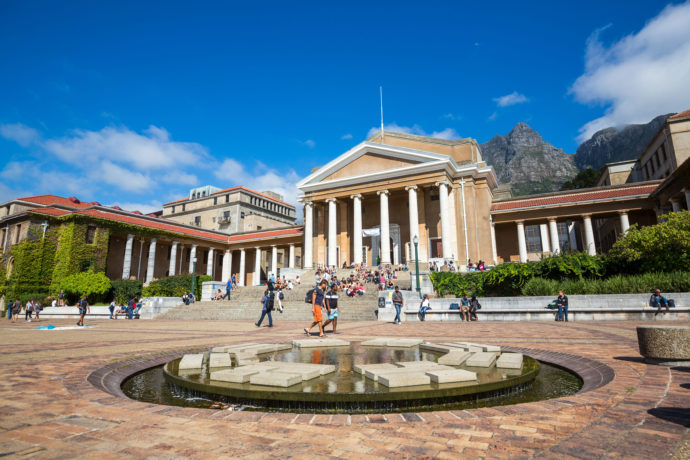
UCT is consistently ranked as the number one university in Africa in the QS World University Rankings, and regularly appears among the top 200 universities globally. Its Upper Campus sits on the slopes of Devil's Peak above Rondebosch in Cape Town, with one of the most iconic university settings in the world. The institution offers undergraduate and postgraduate programmes across six faculties: Commerce, Engineering and the Built Environment, Health Sciences, Humanities, Law, and Science.
For any Nigerian or African student asking whether UCT is still open for 2027, the answer is: applications are open until July 31, 2026. That deadline is today's reality for anyone reading this article close to the date.
Is the University of Cape Town Still Open for 2026?
This question usually means one of two things depending on context. If you are asking whether UCT is open for the 2027 intake (the next academic year), then yes — applications are open from April 1, 2026 until July 31, 2026. If you are asking whether UCT is still accepting 2026 intake applicants, the 2026 academic year has already commenced and that application cycle has been closed since July 2025. The current open window is for the 2027 academic year.
Is UCT Open for 2027 Intake?
Yes. UCT 2027 undergraduate applications are open right now. The application opened April 1, 2026 and closes on July 31, 2026. Housing applications also close on the same date. If you need student accommodation in UCT residences, apply at the same time as your academic application by ticking the accommodation box during the online application process. Missing that tick means you will need to source private accommodation in Cape Town independently.
What is the Closing Date for UCT?
The closing date for UCT 2027 undergraduate applications is July 31, 2026. This applies to all undergraduate programmes without exception including Commerce, Engineering, Health Sciences, Humanities, Law, and Science. Postgraduate applications generally close around September 30, 2026, though specific postgraduate programmes may have earlier deadlines. Late applications are not accepted and UCT does not run a January walk-in process.
Key dates for UCT 2027:
- Undergraduate applications open: April 1, 2026
- Undergraduate applications close: July 31, 2026
- Housing applications close: July 31, 2026
- UCT Open Day: April 25, 2026
- Last date to write National Benchmark Tests (NBTs): October 3, 2026
- Programme change deadline: August 31, 2026
- English proficiency proof deadline (international students): September 30, 2026
- Predicted Grade 12 scores deadline: October 31, 2026
How Much Does It Cost to Apply to UCT?
The UCT application fee for the 2027 intake is:
- South African and SADC applicants: R100 (non-refundable)
- Other international applicants: R300 (non-refundable)
Some sources confirm that for standard undergraduate applications from South African citizens, the application is processed free of charge while SADC and other categories pay R100 and R300 respectively. Always confirm the current fee on the official UCT online application portal before submitting, as this may have been updated.
How Hard is it to Get Into UCT?
Getting into UCT is genuinely difficult. The university receives well over 100,000 applications per year for a fraction of available spaces. Admission is not determined by meeting minimum requirements alone. UCT uses a competitive ranking system where even candidates who meet all minimum thresholds may not receive an offer if other applicants performed better academically.
The selection process at UCT goes beyond a simple APS score. The university uses three scoring systems depending on your faculty and background:
- APS (Admission Points Score): calculated from your best six NSC subjects, excluding Life Orientation. Subjects below 40% do not contribute any points
- FPS (Faculty Points Score): an adaptation of the APS used by specific faculties like Science and Engineering that places higher weight on particular subjects
- WPS (Weighted Points Score): applied to South African applicants, the FPS is adjusted by a disadvantage factor of 0% to 10%, or up to 20% for Health Sciences, to promote equity and access for students from historically disadvantaged backgrounds
These three systems mean that a student from a disadvantaged background with the same raw APS as a student from a well-resourced school may receive a higher effective ranking at UCT, all else being equal.
What APS Score Do You Need for UCT?
UCT APS requirements vary significantly by faculty and programme. Here is a practical guide based on confirmed 2027 intake figures:
Faculty of Commerce (Accounting, Finance, Economics, Business): - Minimum APS: typically 33 to 36 depending on the specific programme - BCom Accounting is the most competitive: 36 to 39 is the realistic range
Faculty of Engineering and the Built Environment: - BSc Engineering programmes: 36 and above for most disciplines - Built Environment courses (Architecture, Urban Design): 33 and above
Faculty of Health Sciences: - MBChB (Medicine): effectively requires an APS of 42 and above — this is one of the most competitive undergraduate programmes in South Africa - Health Sciences programmes generally require 36 and above - NBT is compulsory for all Health Sciences applicants
Faculty of Humanities: - BA programmes: 23 and above for most courses - Some selective programmes in Music and Fine Art have additional portfolio requirements
Faculty of Law: - LLB: 34 to 38 is the realistic competitive range - NBT is compulsory for LLB applicants
Faculty of Science: - BSc programmes: 33 and above for most sciences - Computer Science and Data Science: 36 and above is competitive - Physics and Astronomy: 36 and above
For South African students who qualify under the disadvantage factor adjustment, your effective ranking score may be higher than your raw APS alone. This is particularly significant for students from townships, rural schools, or quintile 1 to 3 schools.
What Courses is UCT Best Known For?
UCT is particularly renowned for the following programmes, which attract students from across Africa and the world:
Medicine (MBChB): UCT's medical school at Groote Schuur Hospital is one of the most celebrated in Africa. It is the hospital where Christiaan Barnard performed the world's first successful human heart transplant in December 1967. UCT MBChB graduates are consistently among the most respected medical professionals in Southern Africa.
Commerce and Finance: The UCT Graduate School of Business (GSB) is ranked among the top business schools globally, and undergraduate Commerce degrees from UCT carry significant weight in investment banking, consulting, and corporate finance across Africa.
Engineering: UCT Engineering graduates, particularly in Chemical, Mechanical, and Civil Engineering, are highly sought after in the mining, energy, and construction sectors.
Law: The UCT Faculty of Law is ranked as one of the top two law faculties in South Africa. Its LLB graduates regularly enter top law firms, the judiciary, and government.
Environmental and Earth Sciences: UCT has particular strength in geology, oceanography, and environmental science given its location near the Cape Biodiversity Hotspot and the Southern Ocean.
Humanities and African Studies: UCT's Centre for African Studies is internationally recognised and the humanities faculty produces scholars who contribute significantly to the African intellectual tradition.
Is UCT the Hardest University to Get Into in South Africa?
By most measures, yes. UCT is widely regarded as the most selective university in South Africa. The combination of its world ranking, the volume of applications it receives, and the high APS requirements — particularly for Medicine, Commerce, and Engineering — place it at the top of the selectivity ladder in South Africa. Stellenbosch University and Wits (University of the Witwatersrand) are close competitors for selectivity, especially in their flagship programmes, but UCT's overall threshold across all faculties is consistently the highest in the country.
Why Are UCT Students Protesting?
UCT has experienced periodic student protests over several issues. The most significant was the #RhodesMustFall movement of 2015, which began at UCT with the removal of the statue of Cecil John Rhodes from the main campus. This movement became a catalyst for the broader #FeesMustFall national student protest of 2015 and 2016, which challenged the escalating cost of higher education in South Africa.
More recent student protests at UCT have centred on accommodation shortages, the high cost of private student housing in Cape Town, allegations of racism in academic institutions, food insecurity on campus, and concerns about student mental health support. UCT has responded to these concerns through expanded financial aid structures, a revised housing application system, and increased counselling services. The institution continues to navigate the tension between elite academic standards and broad access for students from disadvantaged backgrounds.
How to Apply to UCT Online for 2027
The UCT application process is done entirely online. Here is what is required:
Before you apply, prepare the following: - A certified electronic copy of your South African ID or international passport - Your final Grade 11 school results - Your Grade 12 interim or predicted scores if you are currently completing Matric - NBT registration proof and results where applicable - Proof of English language proficiency for non-English-speaking international applicants
Applying: - Visit the official UCT online application at the UCT admissions portal - Create an applicant account using a valid email address - Select up to two academic programmes in your application - Complete all personal, academic, and contact information accurately - Pay the application fee of R100 for SA/SADC or R300 for other international applicants - Upload all required supporting documents - Submit your application and save your unique UCT applicant number - Within 24 to 48 hours, you will receive your UCT Student Number and access to the UCT Student Self-Service Portal (PeopleSoft) for tracking
After submission, track your application status through the PeopleSoft system using your allocated applicant number.
UCT Upper Campus Address
The University of Cape Town's Upper Campus is located at:
University Avenue, Rondebosch, Cape Town, 7701, South Africa
The campus spans the slopes of Devil's Peak in the Table Mountain range. Upper Campus houses the main academic faculties including Science, Humanities, Law, and Engineering. The Health Sciences campus is located separately at Observatory, adjacent to Groote Schuur Hospital.
Has UCC Started Admitting Students for 2026?
This question references a different institution. UCC can refer to the University of Cape Coast in Ghana, which is completely separate from UCT (University of Cape Town) in South Africa. For information about the University of Cape Coast (Ghana) admissions, that is a separate institution with its own application process and timelines. For UCT South Africa, the 2027 application is currently open until July 31, 2026.
UCT 2027 Application — Key Facts at a Glance
| Item | Detail |
|---|---|
| Application window | April 1 to July 31, 2026 |
| Late applications | Not accepted under any circumstances |
| Application fee (SA/SADC) | R100 |
| Application fee (other international) | R300 |
| Minimum APS (general degrees) | 23 to 35 depending on faculty |
| MBChB Medicine effective APS | 42 and above |
| NBT compulsory for | Health Sciences and LLB Law |
| Last NBT date | October 3, 2026 |
| Housing application deadline | July 31, 2026 |
| Programme change deadline | August 31, 2026 |
| Number of faculties | 6 |
| Africa ranking | Number 1 (QS Rankings) |
| Upper Campus address | University Avenue, Rondebosch, Cape Town 7701 |
The deadline is July 31, 2026. Apply now and submit all required documents before the portal closes.
Frequently Asked Questions — University of Cape Town Application 2027
Is the University of Cape Town still open for 2026?
The 2026 academic year is already underway and that application cycle closed in July 2025. The currently open cycle is for the 2027 academic year, with applications accepted from April 1, 2026 to July 31, 2026.
Is UCT open for 2027 intake?
Yes. UCT 2027 undergraduate applications are currently open. The application window runs from April 1, 2026 to July 31, 2026. Housing applications also close on July 31, 2026.
What is the closing date for UCT?
The closing date for all UCT 2027 undergraduate applications is July 31, 2026. No late applications are accepted. Postgraduate applications generally close September 30, 2026.
How much does it cost to apply to UCT?
South African and SADC applicants pay R100. Other international applicants pay R300. The fee is non-refundable.
What courses is UCT best known for?
UCT is particularly renowned for Medicine (MBChB at Groote Schuur Hospital), Commerce and Finance, Law, Engineering, Environmental and Earth Sciences, and Humanities and African Studies. Its medical school holds historic significance as the site of the world's first successful human heart transplant in December 1967.
What GPA or APS score do you need for UCT?
UCT uses an APS calculated from your best six NSC subjects excluding Life Orientation. Minimum APS ranges from 23 for Humanities to 36 and above for Engineering and Commerce. Medicine effectively requires an APS of 42 and above due to the extreme competition.
How hard is it to get into UCT?
Extremely competitive. UCT receives over 100,000 applications annually for a fraction of available spaces. Meeting minimum APS requirements does not guarantee admission. UCT is widely considered the most selective university in South Africa.
Is UCT the hardest university to get into in South Africa?
By most measures, yes. UCT's combination of Africa's highest global ranking, extremely high application volumes, and rigorous faculty-specific APS requirements make it the most selective university in South Africa overall, though Stellenbosch and Wits are competitive in specific programmes.
Why are UCT students protesting?
UCT has experienced student protests over accommodation shortages, the high cost of living in Cape Town, concerns about institutional racism, food insecurity, and mental health support. Earlier protests included the landmark #RhodesMustFall movement of 2015 which led to the removal of the Cecil John Rhodes statue on campus, and the national #FeesMustFall protests of 2015 and 2016.
Is the NBT compulsory for UCT?
The National Benchmark Test is compulsory for all Health Sciences applicants and LLB Law applicants. It is recommended for other faculties. The last date to write the NBT for UCT 2027 admission is October 3, 2026.
Where is UCT Upper Campus?
UCT Upper Campus is at University Avenue, Rondebosch, Cape Town, 7701, South Africa, on the slopes of Devil's Peak. Health Sciences is located separately at the Observatory campus near Groote Schuur Hospital.
Has UCC started admitting students for 2026?
UCC and UCT are two different universities. UCT is the University of Cape Town in South Africa. UCC is the University of Cape Coast in Ghana. This guide covers UCT South Africa. For UCT, the 2027 application is open until July 31, 2026.
Does UCT accept late applications?
No. UCT has a strict policy of not accepting any late applications for undergraduate programmes. Applications submitted after July 31, 2026 will not be considered for the 2027 academic year under any circumstances.
What documents do I need to apply to UCT?
You need a certified copy of your South African ID or international passport, your final Grade 11 results, your Grade 12 interim or predicted scores, NBT registration and results where applicable, and proof of English proficiency for non-English speaking international applicants.

About the Author
SmartJamb Editorial Team
SmartJamb is Nigeria's trusted student education platform, providing accurate and up-to-date information on JAMB, WAEC, NECO, scholarships, and university admissions. Our editorial team is made up of experienced educators and academic writers dedicated to helping Nigerian students succeed.
Trusted by students across Nigeria • Updated daily • Helping you succeed since 2023