Warm Minimalism Decor: How to Make Your Home Look Clean, Cozy, and Expensive (Without Clutter)

Warm Minimalism Decor: How to Make Your Home Look Clean, Cozy, and Expensive (Without Clutter)

Introduction

Warm minimalism decor means your home looks simple and clean, but still feels warm and lived-in. You use calm colors, soft textures, natural materials, and fewer items. You keep open space on purpose. That is what makes it look cozy and expensive, not empty.

1

What Warm Minimalism Decor Really Means (And Why It Looks So “Expensive”)

Warm minimalism decor is not the cold white minimalism people used to do. It is still simple, but it feels human. The goal is a home that looks calm and clean, but also feels soft and welcoming. This is why it looks expensive. Expensive-looking homes are not always full of things. They are usually full of space, good lighting, and a few strong pieces that match. Warm minimalism uses “less stuff, better choices.” That is the whole idea.

A beginner mistake is thinking minimalism means removing everything. That is not warm minimalism. Warm minimalism keeps comfort. It just removes noise. Noise means random items everywhere, too many colors fighting, too many small decorations, and clutter on surfaces. When you remove noise, your eyes relax. When your eyes relax, the room feels premium. It feels like a hotel, but still personal.

Warm minimalism also uses warmth on purpose. Warmth comes from color temperature and texture. Warm color temperature means soft beige, cream, warm gray, sand, light brown, soft black, and sometimes muted green. These colors do not shout. They stay calm. Texture adds the “cozy feeling” that keeps the home from looking boring. Texture can be a linen curtain, a woven basket, a wool rug, a soft throw, or wood furniture with visible grain. When you mix textures, the room feels rich, even if the colors are simple.

Another key part is letting one thing be the focus instead of ten things. Warm minimalism is not about filling every wall. It is about making one wall look right. It is not about decorating every corner. It is about making the main corner beautiful. For example, one strong sofa, one good rug, and one floor lamp can look better than five small tables and many decorations. This is how you get the “designed” look.

Warm minimalism also supports real life. It is easier to clean. It is easier to maintain. It does not depend on you rearranging 30 objects every day. If your home can stay neat with little effort, it will look expensive more often. That is why people love this style. It looks good in photos, and it also feels good in daily life.

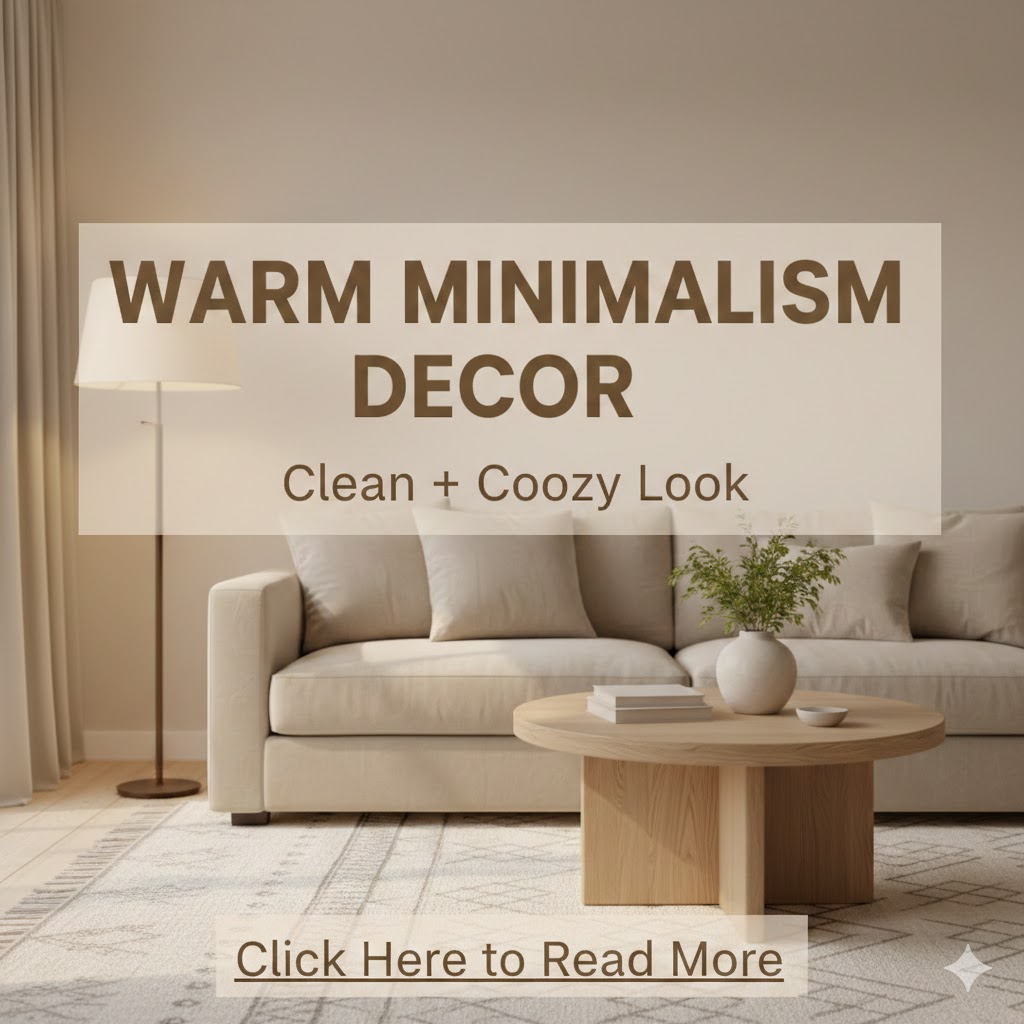
Simple example: A warm beige sofa, a textured cream rug, a wood coffee table, one black floor lamp, one plant, and clear surfaces. Nothing crowded. Everything intentional. That is warm minimalism decor.

2

The Color and Material Rules (So It Looks Warm, Not Empty or “Boring”)

If you want warm minimalism decor, the colors and materials are your foundation. This style fails when the home feels flat. Flat happens when everything is the same white and there is no texture, no depth, and no contrast. Warm minimalism needs quiet colors, but it still needs contrast and layers so your space looks finished.

Start with a warm neutral base. The base means the main color you see first. In most homes, that is walls, curtains, and big furniture like sofa and bed. Warm neutral base colors include cream, off-white, warm gray-beige, light taupe, and soft sand. These colors help light bounce around the room, which makes the space feel brighter and bigger. Bright does not mean harsh. Bright means clean and calm.

Now add one deeper tone for balance. Balance is what keeps the room from looking washed out. The deeper tone can be soft black, deep brown, charcoal, or warm wood. This deeper tone can show up in small ways like picture frames, lamp stands, cabinet handles, or a side table. You do not need a lot. Even small touches are enough. This contrast is what makes warm minimalism look expensive, because it creates clear shapes and structure in the room.

Materials matter more than patterns here. Warm minimalism is not a pattern-heavy style. It is a texture-heavy style. Texture means your room has surfaces that look and feel different. Think of wood, stone, linen, cotton, wool, leather, ceramic, and woven rattan. You can use affordable versions, but keep the look natural. Natural-looking materials make a space feel grounded. Grounded means the room feels stable and calm, not shiny and fake.

Wood is especially powerful. Wood instantly makes a room warm. If you have a cold-looking room, add wood. It can be a wood coffee table, a wood shelf, or even wood frames. The wood tone should feel consistent. You can mix wood tones, but do it carefully. Keep the tones in the same “family.” If one wood is very orange and another is very gray, they may fight. Warm minimalism looks best when the woods feel like cousins, not strangers.

Also, use “soft edges” where you can. Warm minimalism often uses rounded shapes because sharp edges can feel strict. A round mirror, a curved chair, or a round side table can soften the room. This makes the space feel cozy without adding clutter.

Finally, keep your color count low. A simple target is two to four main colors in one room. For example, cream + warm wood + soft black + green from plants. When you stay inside a small color range, the room feels unified. Unified is what people call “put together.” That is the expensive look.

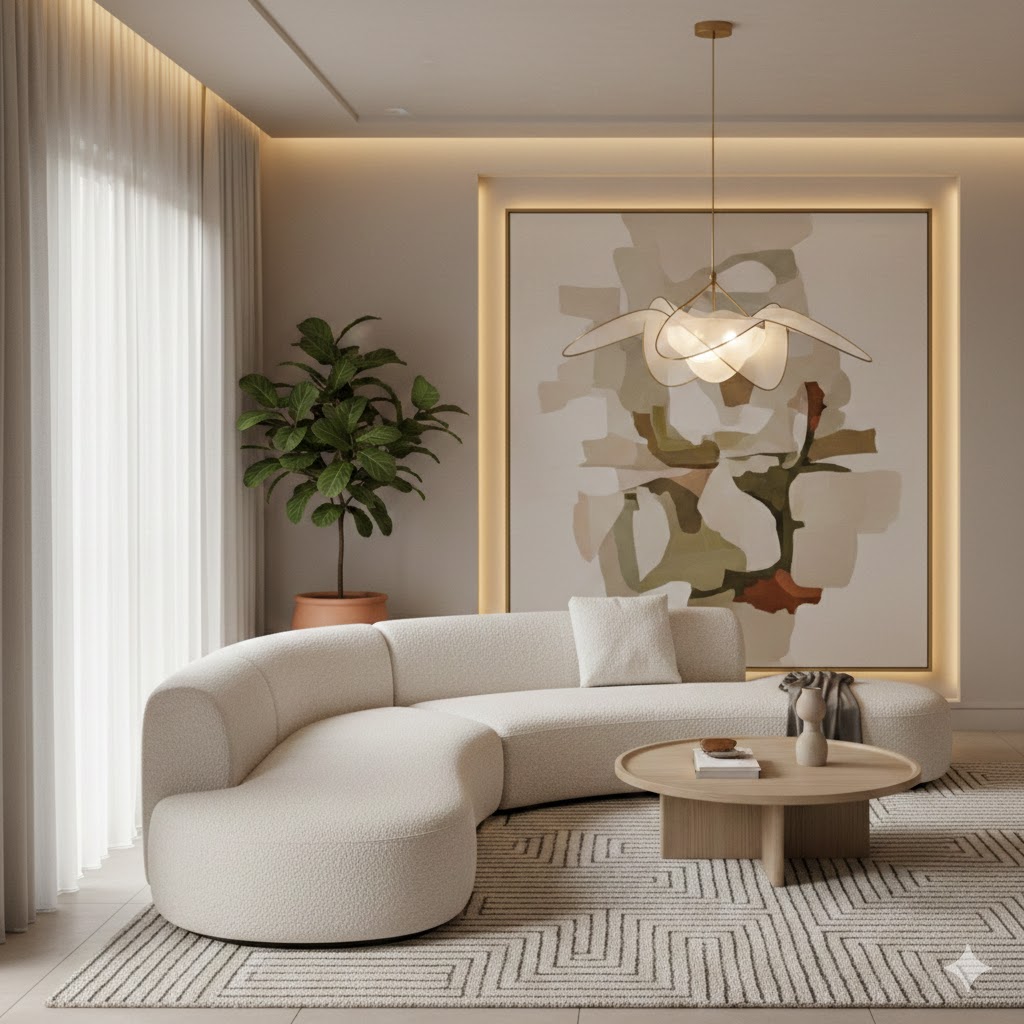
Simple example: Cream walls, beige sofa, oak wood table, black lamp, and one olive plant. Simple colors, rich texture, clean contrast.

3

Furniture and Layout for Warm Minimalism (How to Make the Room Feel Bigger and Cleaner)

Warm minimalism decor is not only about what you buy. It is also about how you place it. Layout is what makes a room feel open or crowded. A beginner mistake is buying many small pieces because they are cheap or easy to move. Many small pieces create visual noise. Visual noise makes the room feel messy. Warm minimalism prefers fewer, stronger pieces that serve clear purposes.

Start with the big anchors. Anchors are the main items that set the room: sofa, bed, dining table, and rug. In warm minimalism, these anchors should look calm. They should have simple shapes and solid colors. A sofa with a busy pattern can fight the calm vibe. A bed with too many colors can feel chaotic. If your anchor pieces are calm, everything else becomes easier.

Next, leave breathing space around furniture. Breathing space means you do not push too many things into one area. People think filling space makes it look complete, but warm minimalism works the opposite way. The space is part of the design. When you can see open floor and clear corners, the room feels bigger and more expensive. This is why warm minimalism looks great in small homes. It uses space like a decoration.

Now think about surfaces. Warm minimalism needs clear surfaces to look right. Clear surfaces mean your coffee table is not full. Your TV console is not full. Your bedside table is not full. That does not mean nothing is there. It means what is there is chosen. A tray, a candle, and one small vase can be enough. The tray keeps items grouped so the surface looks clean. Grouping is key. Random items look messy. Grouped items look styled.

Storage is part of the decor in warm minimalism. This is important. If you have no hidden storage, clutter will win. Use baskets, cabinets, drawers, and boxes that match your room colors. When storage looks good, it becomes decor. When storage is random, it becomes more mess. A simple woven basket can hide blankets and still look beautiful. A closed TV console can hide cables and devices and make the whole wall look premium.

Furniture height also matters. Warm minimalism often looks best when you mix heights. Low sofa, mid-height table, tall lamp, tall plant. This creates a smooth visual flow. Flow means the eye moves comfortably around the room. When everything is the same height, the room looks flat. When heights vary gently, the room feels designed.

Also, choose one “cozy zone.” Warm minimalism loves zones. A zone is a small area with one job. Like a reading corner. One chair, one lamp, one small table, one soft throw. That zone makes the room feel lived-in without being messy. It gives the home a soft story. A home with a story feels warm.

Simple example: In a living room, use one large rug to define the seating zone. Place the sofa and chair so they face each other slightly. Add one floor lamp and one plant. Keep the coffee table mostly clear. That is warm minimalism.

4

Styling and Lighting (The Small Details That Make Warm Minimalism Feel “Finished”)

Warm minimalism decor can look amazing or unfinished depending on styling and lighting. Styling is not adding more stuff. Styling is choosing a few correct details. Lighting is not just brightness. Lighting is mood. Together, they make the home feel complete.

Start with lighting because it changes everything instantly. Warm minimalism is best with soft, warm light. Ceiling light alone can make your room feel flat and harsh. You want layered lighting. Layered lighting means light from more than one place: a floor lamp, a table lamp, and maybe a wall light. When light comes from the side, it creates gentle shadows. Those shadows make textures look richer. That is why warm minimalism looks so good at night in photos. The room glows instead of shining.

Next, use textiles to add warmth without clutter. Textiles are fabric items like curtains, rugs, pillows, and throws. In warm minimalism, textiles should look soft and natural. Linen-look curtains, a textured rug, and a neutral throw blanket can transform a room. But keep the count low. Too many pillows can look messy. A simple rule is two to four pillows on a sofa, not ten. One throw is enough if it is placed neatly.

Now wall styling. Warm minimalism does not need many wall items, but it needs the right wall item. Many people hang small frames and the wall still looks empty. Warm minimalism likes bigger pieces with simple art. One large art piece can finish a wall more than a group of tiny ones. A large round mirror is also perfect because it adds light and makes the room feel bigger. If you want a gallery wall, keep it clean with matching frames and consistent spacing, but warm minimalism usually looks best with fewer frames.

Plants are another finishing touch. Plants add life and softness. You do not need a jungle. One medium plant and one small plant can be enough. The pot matters. A simple ceramic pot or woven basket pot fits the warm minimalism style. If you cannot maintain real plants, a high-quality fake plant is still better than no life at all. The point is the shape and the calm green tone.

Finally, apply the “one surface, one moment” rule. This means each main surface should have one simple styled moment, not many. For example, on a coffee table you can have one tray with a candle and a small vase, and then leave space. On a console, you can have one lamp and one book stack, and then leave space. Leaving space is what makes it feel expensive. Space makes the room feel confident.

Warm minimalism is also about stopping the habit of “decor buying” and starting the habit of “editing.” Editing means removing what does not belong. If something is not useful or beautiful, it goes away. When you edit, the good pieces finally shine.

Simple example: Turn off the ceiling light, turn on a warm floor lamp and table lamp, add one textured throw on the sofa, and clear the coffee table except a tray. The room instantly looks warm and premium.

5

FAQs (Short Answers)

FAQ 1: What is warm minimalism decor?
It is a clean, simple style with warm colors, soft textures, and fewer items.

FAQ 2: Is warm minimalism the same as minimalist decor?
It is similar, but warmer and cozier. It avoids the cold “all-white” look.

FAQ 3: What colors work best for warm minimalism?
Cream, beige, warm gray, taupe, soft black, and natural wood tones.

FAQ 4: How do I start warm minimalism with no budget?
Declutter surfaces, group items, and improve lighting with one warm lamp.

FAQ 5: What materials make it look expensive?
Wood, linen, wool-like textures, ceramic, stone-look finishes, and woven baskets.

FAQ 6: How many decor items should I use?
Fewer, bigger pieces. Keep surfaces mostly clear with one simple styled moment.

FAQ 7: Can warm minimalism work in a small room?
Yes. It often looks best in small rooms because it reduces visual clutter.

FAQ 8: What is the biggest warm minimalism mistake?
Using only white with no texture and adding many small random decorations.

6

Summary Paragraph

Warm minimalism decor is the easiest way to make a home look clean, cozy, and expensive at the same time. Use warm neutrals, natural textures, simple furniture, and clear surfaces. Add soft layered lighting and a few strong pieces, not many small ones. When your space feels calm and edited, it automatically looks “designed.”