Wall Decor Ideas for Any Home: How to Make Your Walls Look Beautiful, Clean, and Expensive

Wall Decor Ideas for Any Home: How to Make Your Walls Look Beautiful, Clean, and Expensive

Introduction

The best wall home decor ideas are simple: choose one clear style, use the right size art for your wall, keep spacing clean, and repeat colors so the wall looks planned. When your wall looks organized, the whole room looks more expensive.

1

Pick One Wall Style First (So Your Wall Looks Planned, Not Random)

Pick One Wall Style First (So Your Wall Looks Planned, Not Random)

Most walls look “bad” for one simple reason. The decor looks random. One small frame here. One sticker there. One clock somewhere. Nothing connects. When the wall has no plan, the room feels messy, even if the floor is clean. The fastest fix is to pick one wall style and stick to it. A wall style is just the “main look” you want your wall to have. It helps you choose the right items and avoid buying things that do not match.

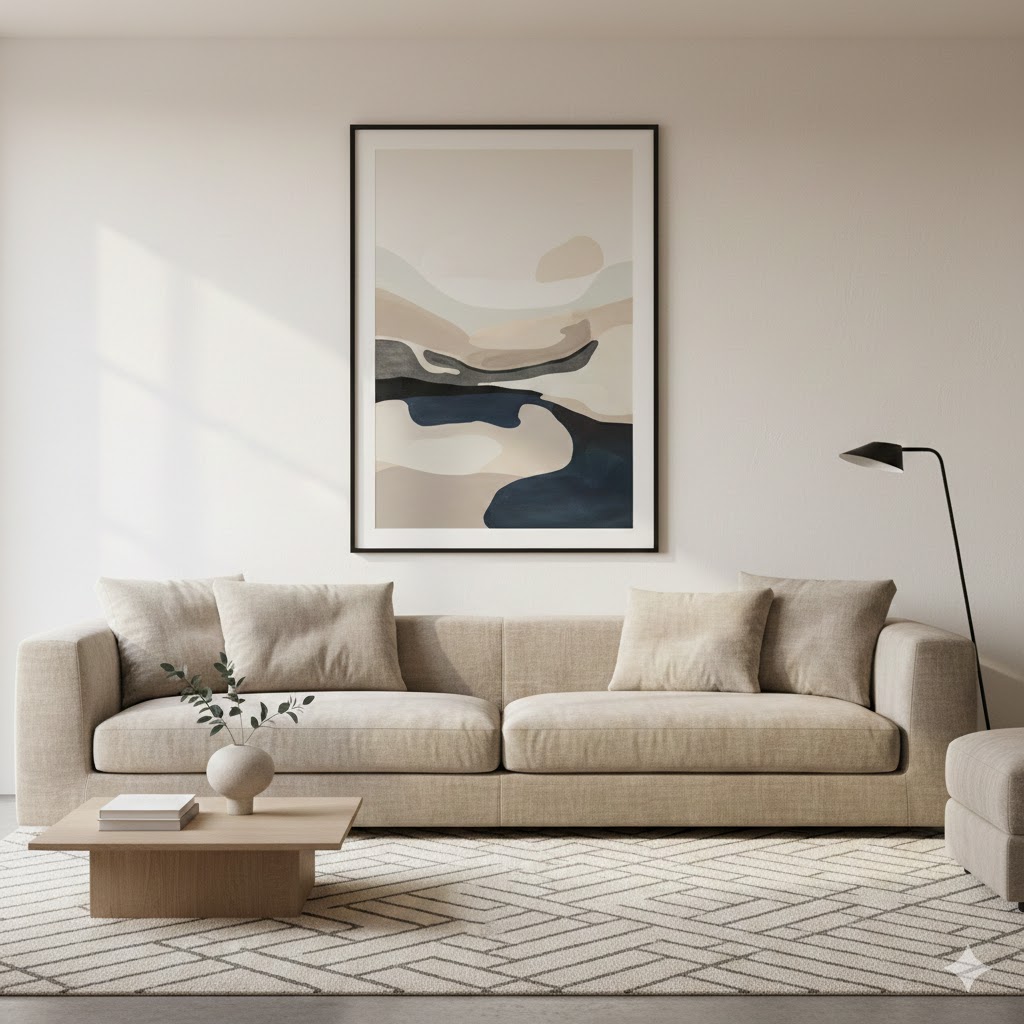
A very easy style is the clean modern style. Clean modern means fewer items, bigger impact. You might use one large art piece, one simple mirror, or one long shelf with a few items. This style works because it keeps the wall calm. Calm walls make a room feel bigger. Calm walls also help your furniture stand out. If your home is small, this style is your best friend because it avoids visual clutter.

Another popular style is the cozy warm style. Cozy warm means your wall has soft colors and natural textures. Think wood frames, beige tones, woven wall baskets, and warm lighting near the wall. This style makes your home feel welcoming. It is perfect for bedrooms and living rooms because it creates a relaxed mood. It also hides imperfections because warm textures distract the eye in a good way.

A third style is the bold statement style. This is when the wall becomes the star. You might use a strong paint color, big wall panels, or a large gallery wall that covers a big section. This can look very expensive, but only if it is controlled. Bold does not mean messy. Bold means “one strong idea done clearly.” If you try to do many strong ideas at once, the wall will feel heavy and stressful.

Now think about what the room is used for. A living room wall can handle bigger art because it is a social space. A bedroom wall should feel calmer because it is for rest. A dining wall can be a little dramatic because it is for enjoyment and conversation. When the wall style matches the room purpose, the space feels correct.

The next step is to choose a simple “color story.” Color story means you repeat a few colors across the wall items. If your room has beige and black, then choose art that includes beige and black. Choose frames that are similar. Use the same metal tone if you can, like all black or all gold. Repeating colors is how designer rooms look connected. Random colors are how walls look cheap.

Also decide how “busy” you want the wall to be. Some people love lots of frames. Some people feel stressed by too much visual activity. Your wall should match your brain. If you like calm, choose one big piece or one mirror. If you like creative energy, choose a gallery wall, but keep it organized with clean spacing.

Simple example: If you want a modern wall, pick one large framed art above the sofa, use a thin black frame, and repeat black in a cushion or lamp. Now the wall and the room match.

2

Use the Right Size and Placement (The “Too Small” Problem That Ruins Most Walls)

Use the Right Size and Placement (The “Too Small” Problem That Ruins Most Walls)

The biggest wall decor mistake is not the art itself. It is the size. People buy small frames because they are cheaper or easier to find. Then they hang them on a big empty wall. The result looks weak and awkward. A wall needs decor that matches its size. When decor is too small, the wall still feels empty, and the art looks lost. That is why expensive homes often use bigger art. Bigger art gives a stronger “finished” look.

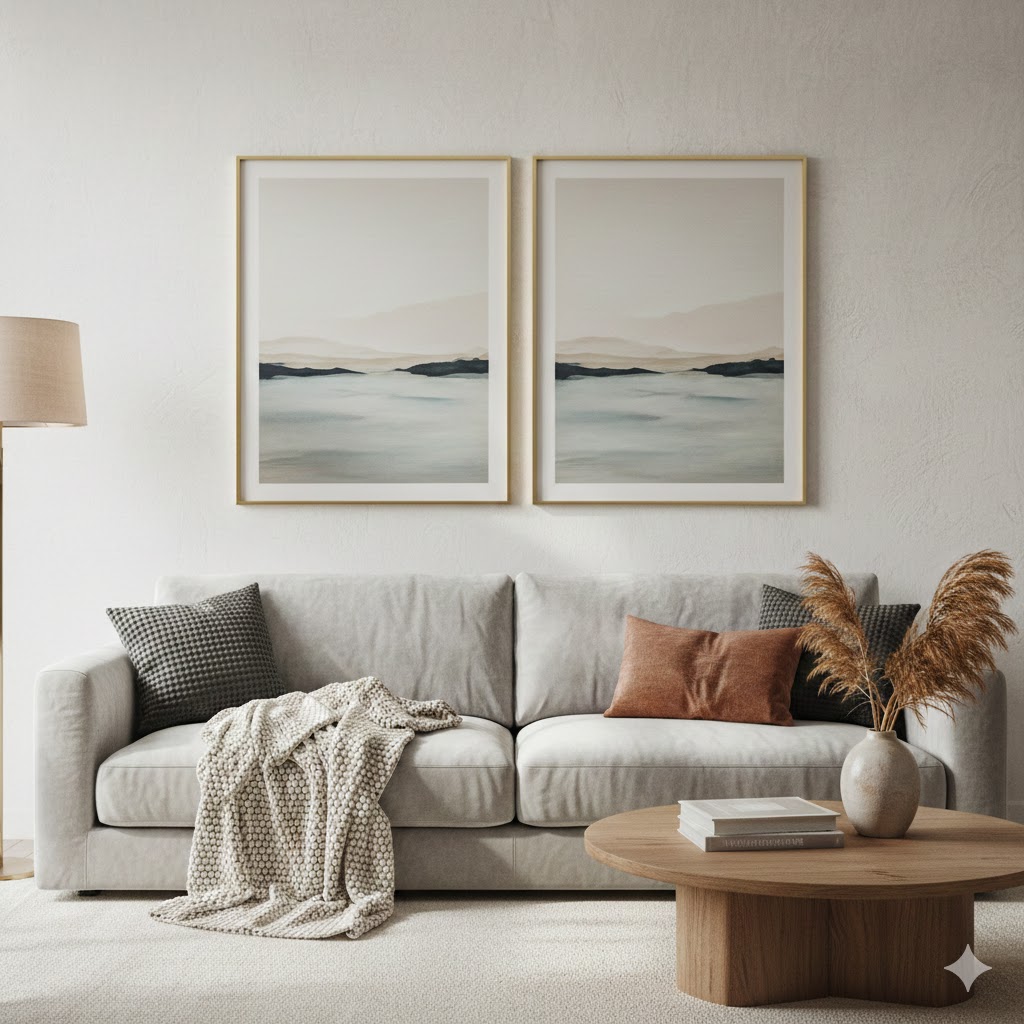
A simple rule is this: your wall decor should fill the space it is meant to fill. If you are decorating above a sofa, the art should be wide enough to relate to the sofa. If it is a tiny frame above a wide sofa, it looks like a mistake. If you cannot buy one huge art piece, you can use two medium pieces side by side, or a set of three that are clearly planned. The trick is to make the total width feel balanced with the furniture below it.

Height also matters. Many people hang wall art too high. Then it feels disconnected from the room. A simple way to think is this: wall decor should sit in the “human zone,” not near the ceiling. The human zone is where your eyes naturally look when you stand or sit. When art is too high, it feels like a decoration for the ceiling, not for the living space. Above furniture, the bottom of the frame should not float too far away. It should feel connected, like one complete setup.

Now let’s talk about spacing. Spacing is what makes wall decor look clean. If you do a gallery wall, you must keep spacing consistent. If the gaps between frames are random, it looks messy. Consistent spacing makes it look professional. It tells the brain: “This was planned.” It also makes the wall feel calm even when there are many frames.

Another mistake is placing decor without alignment. Alignment means frames line up in a clear way. You can align by top edge, bottom edge, or center line. This is why some gallery walls look expensive and others look like random posters. Expensive gallery walls have order.

Also consider the wall’s “visual center.” The visual center is usually not the same as the wall’s exact center if the room layout is uneven. For example, if your sofa is slightly off-center, your art should still center over the sofa, not the wall. People decorate for the furniture zone, not for the raw wall measurement. This makes the room feel balanced when you sit down and use it.

Mirrors follow the same rules. A mirror should be sized to the area. A tiny mirror on a big wall looks cheap. A mirror that is tall enough to reflect light and space looks premium. Mirrors also help small rooms feel bigger because they bounce light and create depth.

Simple example: You have a 3-seat sofa. Choose one large art piece that looks wide over the sofa. If you can’t, use two medium frames side by side with the same height and the same frame color. Hang them at eye level and keep the gap equal.

3

Wall Decor That Looks Expensive Without Being Expensive (Texture, Lighting, and “One Wow Detail”)

A wall looks expensive when it has depth. Depth means it is not flat and boring. You can create depth without spending a lot of money. The secret tools are texture, lighting, and one wow detail. When you combine these three, the wall becomes “designed,” even if the items are simple.

Texture is the easiest upgrade. Texture can be wood frames, woven baskets, fabric wall hangings, fluted wall panels, or even a textured paint finish. You do not need to do all of them. One textured element is enough. Texture works because it catches light and creates shadows. Shadows create depth. Depth looks premium. This is why plain walls sometimes feel cheap, even if the furniture is nice. A little texture makes the wall feel richer.

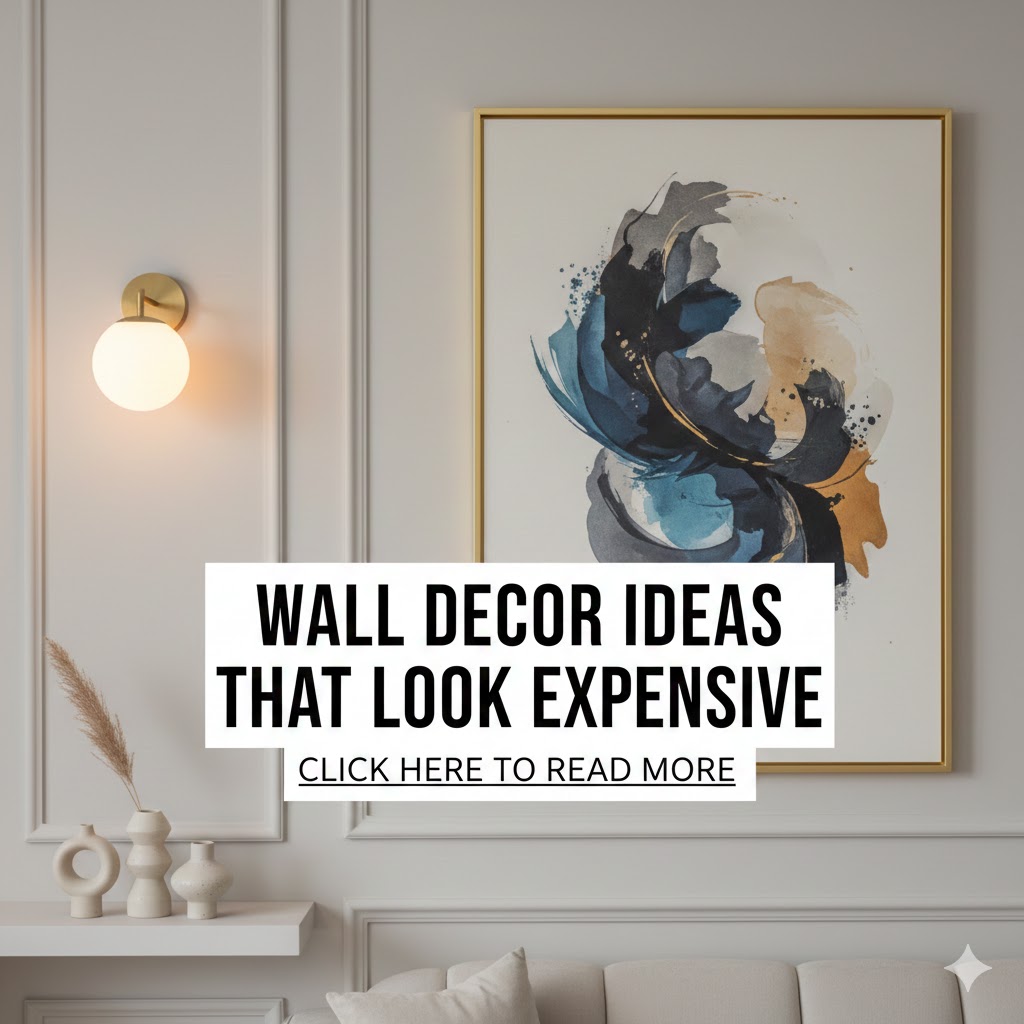
Lighting is the second secret. Most people only use ceiling light. Ceiling light can be harsh and flat. Wall areas look better with soft light that comes from the side. A floor lamp near the wall can make art look more beautiful at night. A table lamp under a wall shelf can create warm glow. If you want a very premium look, use wall sconces. Sconces are lights attached to the wall. Even simple sconces can make your wall look like a hotel or a luxury apartment because they add structure and mood.

Now the “one wow detail.” A wow detail is one item that instantly grabs attention. It can be a big mirror with an interesting shape. It can be a large art piece with a strong color. It can be a wall panel section behind the TV. It can be one large clock that is modern and clean. The mistake people make is adding many wow items. Then nothing looks special. One wow item works because it gives the wall a clear focal point. A focal point is the first thing the eye lands on. When the wall has a focal point, the room feels intentional.

A very strong wow detail for many homes is a large round mirror. It reflects light, makes the room look bigger, and feels classy. Another strong wow detail is an oversized frame with simple art inside. Simple art looks expensive when it is big, clean, and framed well. If you want to save money, you can use printable art and invest more in a good frame. The frame often matters more than the art.

Shelves can also create an expensive look, but only when styled simply. The expensive shelf look has space. It does not have too many items. A clean shelf might have a small plant, a stack of books, and one vase. Then empty space. Empty space is not “wasted.” Empty space is what makes the shelf look high-end. If you fill every inch, it looks like storage, not decor.

Finally, keep your wall decor easy to clean. Dust is real. If your wall decor is too complex, you will stop cleaning it, and it will look old fast. Choose pieces you can wipe quickly. A clean wall always looks more expensive than a dirty wall.

Simple example: Add one large round mirror, one textured element like a woven wall basket, and one warm lamp that shines softly toward the wall. That wall will look richer instantly.

4

Room-by-Room Wall Ideas (Living Room, Bedroom, Dining, and Hallway)

Wall decor should match the room, because each room has a different job. When the wall matches the room’s job, the home feels peaceful. When the wall fights the room’s job, the space feels confusing. So the smartest wall home decor ideas are not “one style for the whole house.” They are “one smart idea per room.”

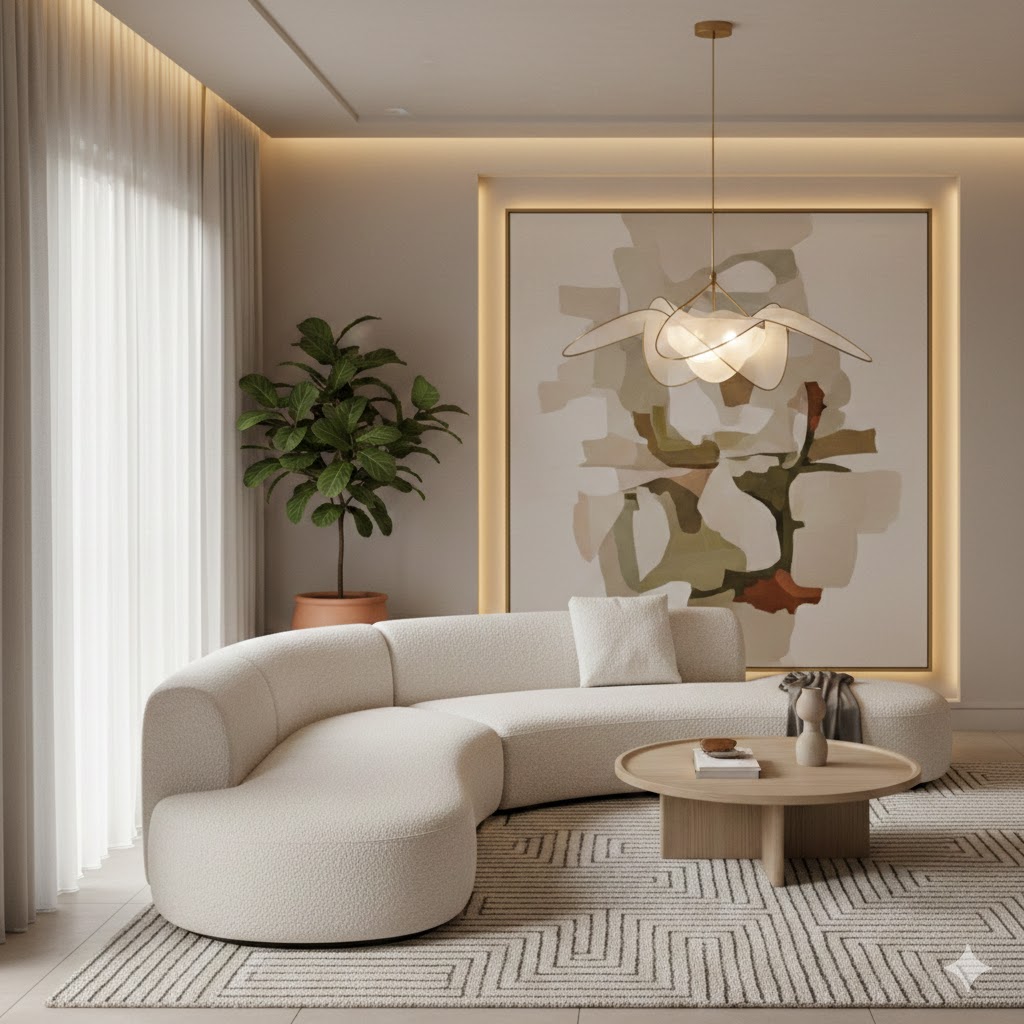
In the living room, the wall usually needs one strong focal point. This is where people sit and look. So your wall should be calm but interesting. The easiest living room wall setup is art above the sofa plus one side element like a tall plant or a floor lamp. If your living room has a TV wall, the decor should not compete with the screen. Keep the TV wall clean, use a console, hide cables, and use soft backlighting if you like. If you want a gallery wall in the living room, keep it organized and use frames that match. Living room walls look best when they feel balanced with the seating area. It should look like the wall and the sofa belong together.

In the bedroom, the wall should help you rest. So avoid very loud colors and chaotic layouts. The best bedroom wall decor is simple: one large art above the headboard, or two matching frames side by side, or a soft fabric wall hanging that adds warmth. Mirrors can work in bedrooms, but place them carefully so they do not reflect bright light into your eyes at night. Bedrooms also look great with warm lighting on the wall, like small sconces or bedside lamps that create a calm glow.

In the dining area, the wall can be more dramatic because dining is for enjoyment and conversation. A dining wall can have a big statement art piece, a bold color accent wall, or a mirror that reflects the dining light and makes the space feel larger. A dining wall also looks good with a long shelf holding a few simple pieces. Keep it elegant, not crowded. When dining walls look clean and styled, the room feels like a restaurant vibe at home.

In hallways and entryways, wall decor should guide the eye and make the space feel welcoming. Hallways are usually narrow, so avoid deep shelves that people bump into. A hallway wall looks great with a line of frames in the same size and the same spacing. This makes the hallway feel longer and more polished. An entryway wall can use one mirror and a small key hook area. Mirrors are perfect in entryways because they help you check your look before leaving, and they bounce light in small spaces.

Now let’s talk about blank wall panic. Some people feel they must fill every blank wall. You do not. A blank wall can be part of a clean design. The goal is not to fill. The goal is to finish the room. Sometimes, one finished wall is enough, and other walls should stay calm so the room can breathe.

Also, think about safety and damage. If you rent your home, you can use removable strips, lightweight frames, and peel-and-stick wall panels that are easy to remove. You can still get a premium look without drilling many holes.

Simple example: Living room: one big art above sofa. Bedroom: two matching frames above bed. Dining: one statement mirror. Hallway: a neat line of small frames with equal spacing.

5

FAQs (Short Answers)

FAQ 1: What is the easiest wall decor idea that always works?
One large framed art piece centered above furniture.

FAQ 2: Why does my wall decor look cheap?
Most times it is too small, too high, or too random.

FAQ 3: How do I make a gallery wall look clean?
Use matching frames and keep spacing consistent.

FAQ 4: Should wall decor match the sofa?
It should match the room’s colors, not the sofa only. Repeat 2–3 colors.

FAQ 5: Are mirrors good wall decor?
Yes. They add light and make rooms feel bigger.

FAQ 6: What wall decor is best for small rooms?
Big simple art, mirrors, and minimal shelves with open space.

FAQ 7: How do I make wall decor look expensive on a budget?
Use larger pieces, good frames, texture, and warm lighting.

FAQ 8: Can I decorate walls in a rental?
Yes. Use removable strips, lightweight frames, and peel-and-stick options.

6

Final Summary Paragraph

The best wall home decor ideas are not complicated. Pick one wall style, use the right size and height, repeat colors, and add depth with texture and warm lighting. Keep it clean and balanced, and your walls will make your whole home look more modern, cozy, and expensive.