The entryway sets the tone for the entire visit. Within seconds, guests form an impression of your home. A clean, organized, and thoughtfully styled entrance immediately creates comfort.
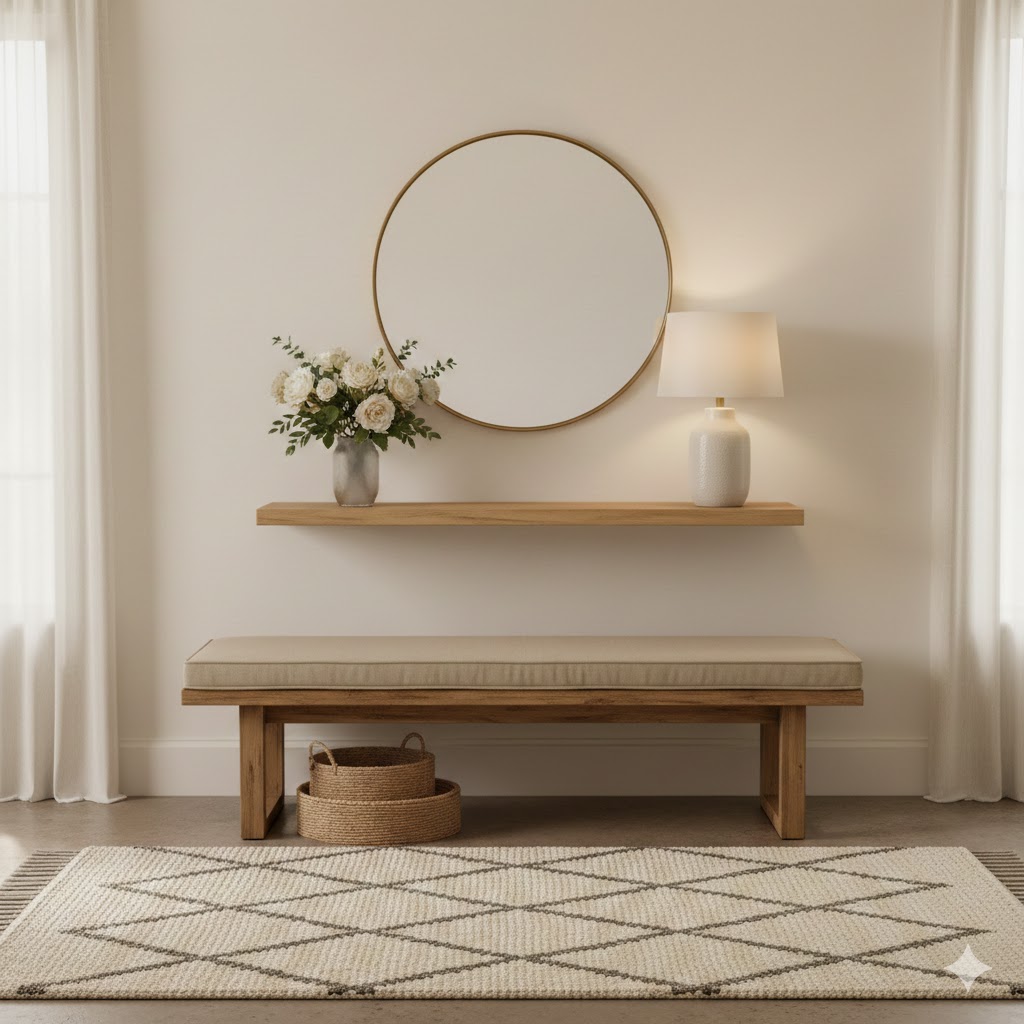
Start with decluttering. Shoes scattered on the floor, random bags, or mail stacks create visual stress. Keep the entry area minimal. Use a small console table or floating shelf to define the space. If the area is small, even a narrow bench works.
Lighting is essential. Entryways should feel bright but warm. Use a soft warm light bulb (around 2700K–3000K) to create comfort. If possible, add a table lamp or wall sconce instead of relying only on ceiling lighting. Layered light feels more inviting.
Add a mirror. Mirrors reflect light and make small spaces feel larger. They also allow guests to check their appearance. A round mirror softens the space, while a rectangular one feels structured.
Include a small decorative element. A vase with fresh flowers, a bowl for keys, or a candle adds warmth. Avoid overcrowding the surface. One or two decorative pieces are enough.
Provide practical comfort. A small bench allows guests to remove shoes easily. A coat rack or wall hooks give them a place to hang jackets. These details make visitors feel considered.
Use neutral or soft welcoming colors. Beige, soft gray, warm white, or muted green create calmness. Avoid overly dark entryways unless balanced with strong lighting.
Add subtle scent. A lightly scented diffuser near the entrance gives a pleasant first impression. Avoid strong fragrances.
Keep floors clean and add a quality doormat. A layered rug setup—one outdoor mat and one indoor rug—adds texture and style.
The entryway should feel open, clean, and intentional. When guests walk in and feel at ease immediately, you have succeeded.