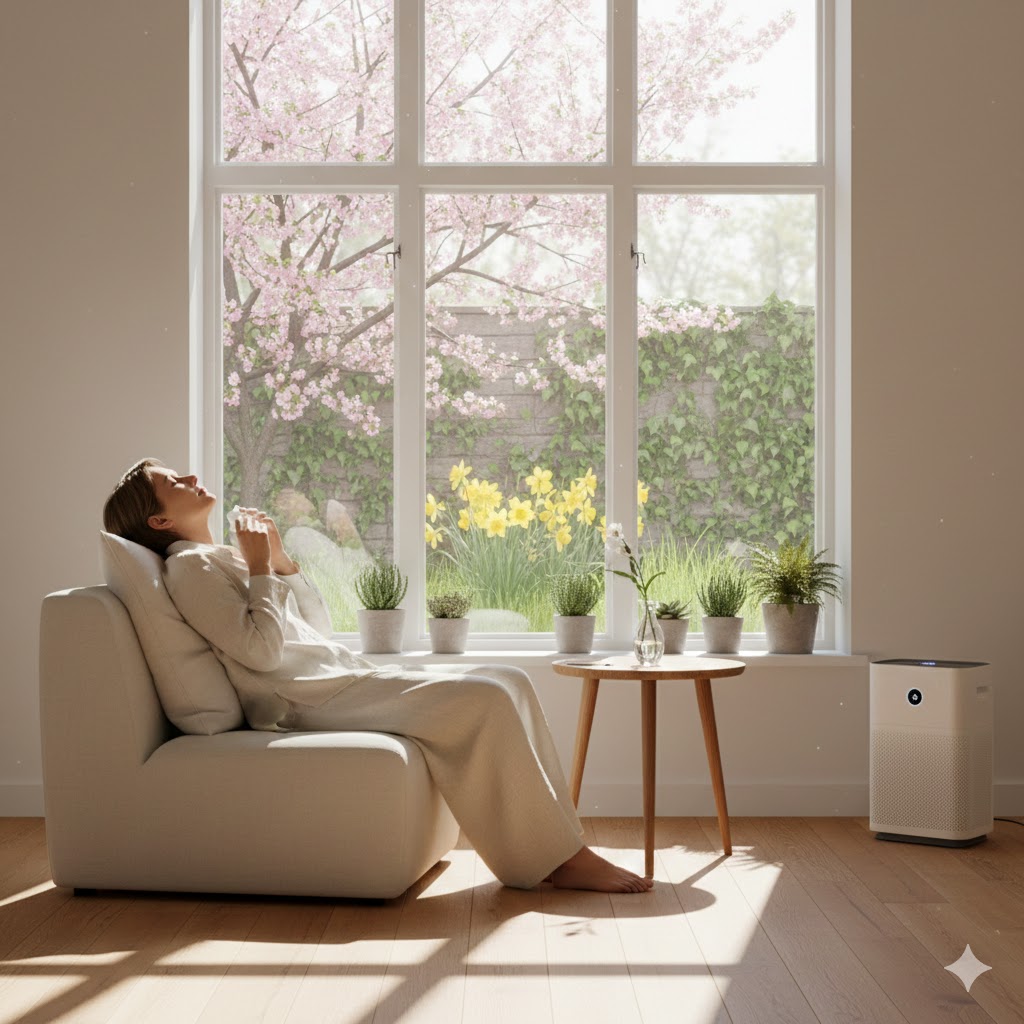
Spring allergies happen when plants release pollen into the air. Your body thinks pollen is dangerous and reacts. This reaction causes sneezing, watery eyes, and a runny nose. Many people experience symptoms in March when trees and flowers begin to bloom
Spring Allergy Survival Guide for Beginners (Simple Relief Tips)
Introduction
Spring allergies happen when pollen fills the air. Many people feel sneezing, itchy eyes, and congestion in March. This guide explains allergies in a simple way and shows how to reduce symptoms.
1
What Spring Allergies Are
2
How to Reduce Spring Allergy Symptoms
Keep windows closed during high pollen days. Fresh air feels nice, but pollen enters easily.
Shower after being outside. Pollen sticks to hair and clothes and can cause symptoms later.
Wash bedding often. Pollen can collect on sheets and pillows.
Use an air purifier indoors. Clean air helps reduce allergy triggers.
Avoid drying clothes outside. Pollen sticks to fabric.
Check daily pollen levels. This helps plan outdoor activities better.
3
Examples & Case References
A remote worker reduced symptoms by showering after walks and keeping windows closed.
A parent washed bedding twice a week and noticed fewer nighttime symptoms.
An apartment renter added an air purifier and experienced less congestion indoors.
4
FAQ Section
Why are allergies worse in March?
Trees release pollen as spring begins.
Can spring allergies start suddenly?
Yes. Many people develop allergies later in life.
Are allergies the same as a cold?
No. Allergies last longer and do not cause fever.
Does rain help allergies?
Light rain can reduce pollen temporarily.
Can food affect allergy symptoms?
Some foods may make symptoms worse for certain people.
Do air purifiers really help?
Yes. They reduce pollen indoors.
Spring allergies are common in March. Small daily habits can greatly reduce symptoms. Managing pollen exposure makes spring more enjoyable.