Quiet Luxury Home Decor: How to Make Your Home Look Rich, Clean, and Calm (On a Budget)

Quiet Luxury Home Decor: How to Make Your Home Look Rich, Clean, and Calm (On a Budget)

Introduction

Quiet luxury home decor is a style that looks expensive without showing off. It uses calm colors, quality-looking materials, simple shapes, and clean space. The home feels rich because it looks controlled, tidy, and timeless.

1

What Quiet Luxury Home Decor Means (So You Don’t Copy the Wrong “Luxury”)

Quiet luxury is not the same as flashy luxury. Flashy luxury is shiny, loud, and full of “look at me” items. Quiet luxury is calm. It looks rich because it looks confident. Nothing is fighting for attention. The room has space. The room has balance. The room has good materials and good lighting, even if the furniture is not expensive.

A big beginner mistake is thinking luxury means adding more decorations. That usually makes the room look cheaper. Quiet luxury works by removing clutter and upgrading the “big visual areas.” Big visual areas are what your eyes notice first: walls, floors, sofa area, bed area, curtains, and lighting. If these look calm and clean, your home looks expensive even if you did not buy designer items.

Quiet luxury also has a “hotel feeling.” Hotels feel expensive because they are simple and organized. Surfaces are clear. Colors are coordinated. Everything has a place. This is why the same room can look cheap or expensive depending on how it is arranged. A messy console with wires and random items will ruin the whole room. A clean console with hidden storage and one styled moment will make the room feel premium.

Another key part is timeless design. Quiet luxury avoids trendy items that look outdated fast. Instead, it uses classic shapes and calm colors. This is powerful for SEO and Pinterest because people keep searching these ideas every year. It never dies. It is always relevant.

Quiet luxury is also about “texture over pattern.” Pattern can be fine, but too much pattern makes the room noisy. Quiet luxury uses textures like wood grain, linen, wool-like rugs, stone-look surfaces, ceramics, and matte metals. These textures make the room feel rich because they create depth. Depth is what makes a space look layered and expensive.

And here is the best part. Quiet luxury can be done on a budget because it is not about brands. It is about rules. The rules are: fewer items, better coordination, clean surfaces, soft lighting, and natural-looking materials. If you follow those rules, people will think you spent more than you did.

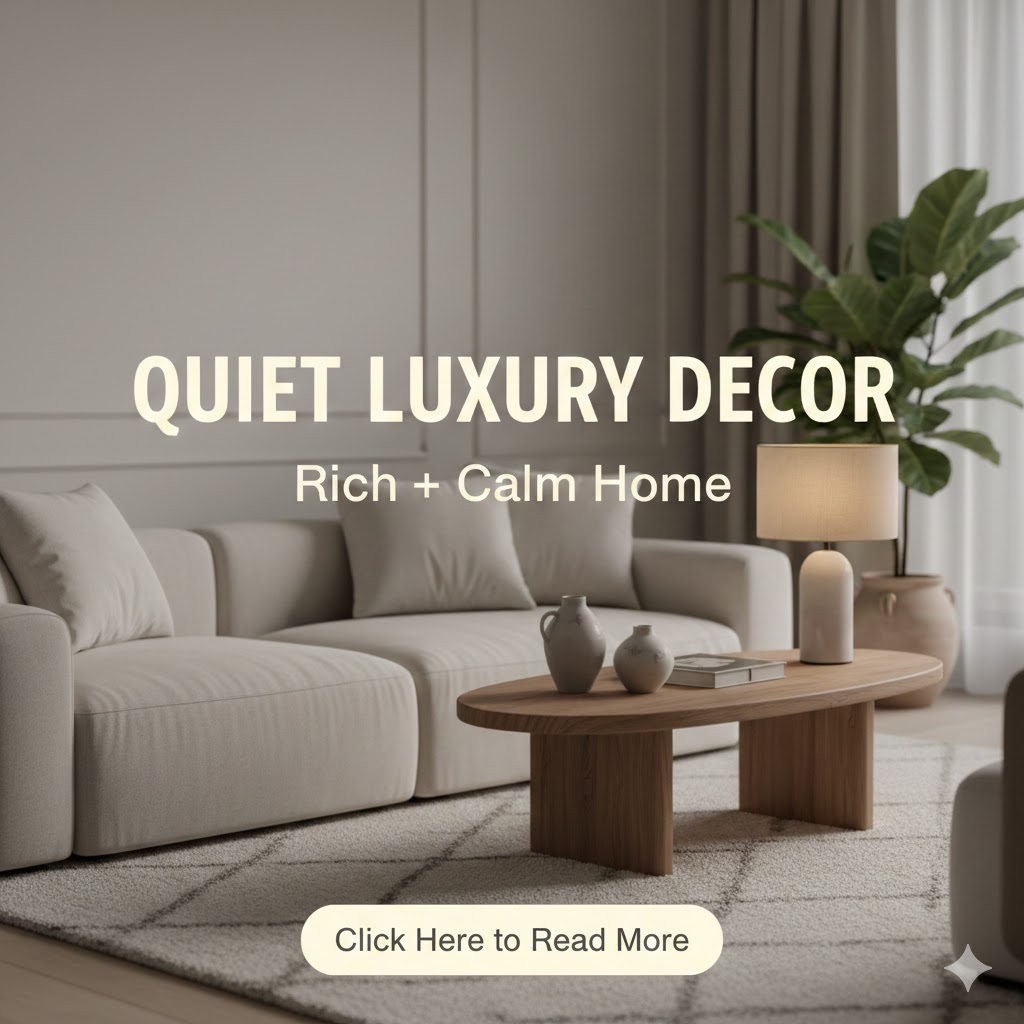
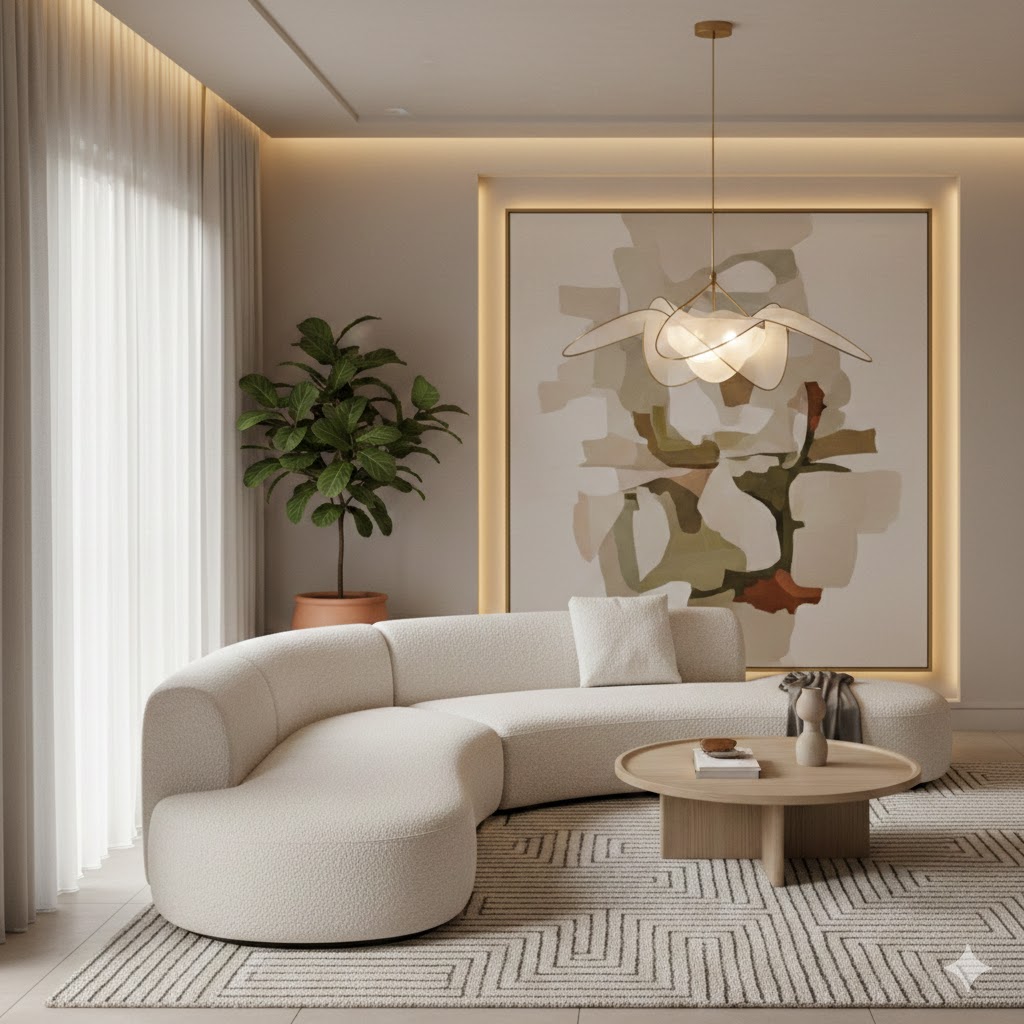
Simple example: A beige sofa, a large textured rug, a wood coffee table, a soft lamp, and a few calm decor items. Everything matches. Nothing shouts. That looks expensive.

2

The Quiet Luxury “Color Formula” (How to Choose Colors That Look Rich)

Color is one of the fastest ways to make a home look expensive or cheap. Quiet luxury uses colors that feel calm, soft, and mature. It avoids harsh bright colors on big surfaces. Bright colors can still exist, but only as tiny accents. The main look stays neutral and controlled.

Start with a warm neutral base. The base is your largest areas: walls, big furniture, curtains, and rugs. Quiet luxury base colors include cream, ivory, warm white, taupe, warm gray-beige, sand, and soft stone tones. These colors reflect light gently. They do not feel sharp. They also make the home feel bigger and cleaner because the eye can relax.

Next, add one deeper anchor color. A room needs contrast or it looks washed out. Quiet luxury contrast is not neon. It is soft black, charcoal, deep brown, espresso, or deep olive. This anchor color shows up in a few places only: lamp stands, picture frames, side tables, cabinet handles, or one accent chair. This is what creates structure. Structure makes the room feel designed and expensive.

Then add one natural tone. Natural tones come from wood and earthy colors. Wood is a quiet luxury cheat code. It adds warmth and richness instantly. The best part is you can get wood tones from affordable items too, like a small table, a tray, frames, or a shelf. Keep the wood tones in the same family so the room feels consistent. Consistency is luxury. Random is cheap.

Now choose one metal finish and repeat it. Many rooms look messy because they mix silver, gold, bronze, and black with no plan. Quiet luxury likes repetition. If your handles are black, choose black picture frames and black lamp details. If you choose brushed gold, repeat it in a mirror frame or a small decor piece. Repetition makes the room feel intentional.

Also, quiet luxury likes “matte” more than “shiny.” Shiny surfaces can look cheaper if overdone. Matte finishes feel soft and expensive. Matte black, brushed metals, and soft ceramic are perfect.

Finally, keep the color count low. Two to four main colors per room is enough. For example: cream + warm wood + soft black + green from plants. That is a quiet luxury color story. It looks expensive because it is controlled.

Simple example: Cream walls, taupe sofa, warm oak table, soft black lamp, and one olive plant. Calm and rich.

3

Materials That Make a Home Look Expensive (Even When You Bought Them Cheap)

Quiet luxury is mostly materials. Not brand names. Materials are what the room “feels like” visually. If materials look cheap, the room looks cheap. If materials look natural and calm, the room looks expensive.

The first material is texture-rich fabric. Think linen-look curtains, textured cushions, and wool-like rugs. These do not need to be real luxury fabric. They just need to look thick and soft, not thin and shiny. Thin, shiny fabric often looks cheap on camera and in real life. Textured fabric looks richer because it catches light in a softer way.

The second material is wood. Wood makes rooms warm and premium fast. You can use wood in the coffee table, side table, TV console, frames, shelves, or trays. Even small wooden touches help. If you cannot buy real wood furniture, choose wood-look pieces that do not look too glossy. Glossy fake wood looks cheap. Matte wood looks better.

The third is stone or stone-look. Marble-look, travertine-look, or simple stone textures make a home feel expensive because they are associated with high-end spaces. You do not need real stone. You can use small stone-look pieces like a tray, a side table top, or even a simple neutral vase with a stone-like texture. The point is the vibe: calm, natural, and heavy-looking.

The fourth is ceramics. Ceramic decor pieces look expensive because they feel handmade and timeless. A simple neutral ceramic vase can upgrade a console instantly. Keep shapes simple. Quiet luxury loves simple shapes.

The fifth is glass used carefully. A glass coffee table can look premium, but it must stay clean. If you have dusty air or kids touching everything, glass can become stressful. Quiet luxury is about calm living. So choose materials that you can maintain easily.

Now, one of the biggest quiet luxury secrets is “bigger pieces, fewer items.” A cheap small decor item looks cheap. But one larger, simple piece can look expensive even if it was affordable. A large mirror. A large art print in a good frame. A big rug. These items change the room’s feeling. This is why quiet luxury budgets should go toward big visual upgrades, not lots of tiny items.

Also, storage is a material choice too. If your storage looks messy, your home looks messy. Choose closed storage when possible. Closed storage hides clutter. Clutter kills luxury. A simple cabinet, a basket with a lid, or a clean drawer unit can keep the room looking rich daily.

Simple example: One large textured rug, one wood table, one ceramic vase, and linen curtains. The room will look more expensive even if nothing is designer.

4

Quiet Luxury Styling and Lighting (The “Rich Look” is Mostly Clean Space)

If you copy quiet luxury colors and materials but your home still looks “average,” the missing piece is usually styling and lighting. Quiet luxury is a mood. Mood comes from what you leave out, not only what you add.

Start with clean space. Quiet luxury needs open space on purpose. Clear floor paths. Clear surfaces. Clear corners. This does not mean empty. It means controlled. The room should feel like it can breathe. If every surface has items, the room feels busy. Busy looks cheap. Calm looks expensive.

Now use the “one surface, one moment” rule. Each main surface should have one simple styled setup, not many. For example, on a coffee table you can place a tray, a candle, and a small vase. Then leave space. On a console, you can place a lamp and a book stack. Then leave space. That empty space is not wasted. It is what makes the items look intentional.

Lighting is the biggest quiet luxury upgrade. Ceiling light alone is not enough. Quiet luxury uses layered lighting. Layered lighting means multiple soft light sources. A floor lamp near the sofa. A table lamp on a console. Maybe a wall sconce if you can. Soft warm light makes textures look richer. It also makes the room feel expensive at night. When your lighting is warm and calm, your home feels like a high-end hotel.

Also, keep your bulbs consistent. If one bulb is bright white and another is warm yellow, the room looks off. Quiet luxury looks best when lighting feels unified. That means the same warm tone across lamps.

Curtains are another silent luxury tool. Curtains make rooms look finished. Even if you have basic furniture, good curtains can upgrade the space. Choose curtains that look full and soft, not thin and short. If you can, hang them higher to make the room feel taller. Tall rooms feel expensive.

Finally, edit your decor weekly. Quiet luxury is not “decorate once and forget.” It is “keep it clean.” Put away random items daily. Hide cables. Use a basket for remotes. Keep your entry area tidy. When the home stays tidy, it looks expensive more often.

Simple example: Turn off the ceiling light. Turn on a floor lamp and table lamp. Clear the coffee table except a tray. Hide wires. The room instantly looks richer.

5

FAQs (Short Answers)

FAQ 1: What is quiet luxury home decor?
A calm, expensive-looking style with neutral colors, quality textures, and no clutter.

FAQ 2: Can quiet luxury work on a budget?
Yes. It is about rules and styling, not expensive brands.

FAQ 3: What colors are quiet luxury?
Cream, taupe, warm gray, soft black, deep brown, and natural wood tones.

FAQ 4: What makes a home look “quiet luxury” fast?
Large rug, clean curtains, hidden clutter, and warm layered lighting.

FAQ 5: What should I avoid?
Too many small decor items, messy cables, shiny cheap finishes, and random colors.

FAQ 6: Is quiet luxury the same as minimalist?
Similar, but quiet luxury focuses more on rich textures and timeless materials.

FAQ 7: Do I need marble and gold?
No. You only need natural-looking materials and one consistent metal finish.

FAQ 8: How do I keep it looking expensive daily?
Clear surfaces, use storage, and keep lighting soft and warm

6

Final Summary Paragraph

Quiet luxury home decor is the “rich but simple” look. Use warm neutrals, natural textures, bigger pieces, and fewer items. Keep surfaces clear, hide clutter, and add soft layered lighting. When your home feels calm and controlled, it automatically looks expensive.