When you live in one room, everything happens in the same space. You sleep there. You eat there. You study there. You change clothes there. Sometimes you even cook there. If you treat the room like one open empty box, it will feel messy and stressful. The secret is zoning. Zoning means you give each activity its own small area. This makes the room feel organized. It also makes your brain feel calmer, because your brain knows what happens in each corner. A one-room setup is not about decorating every space. It is about creating order. Order is what makes a small space feel bigger.
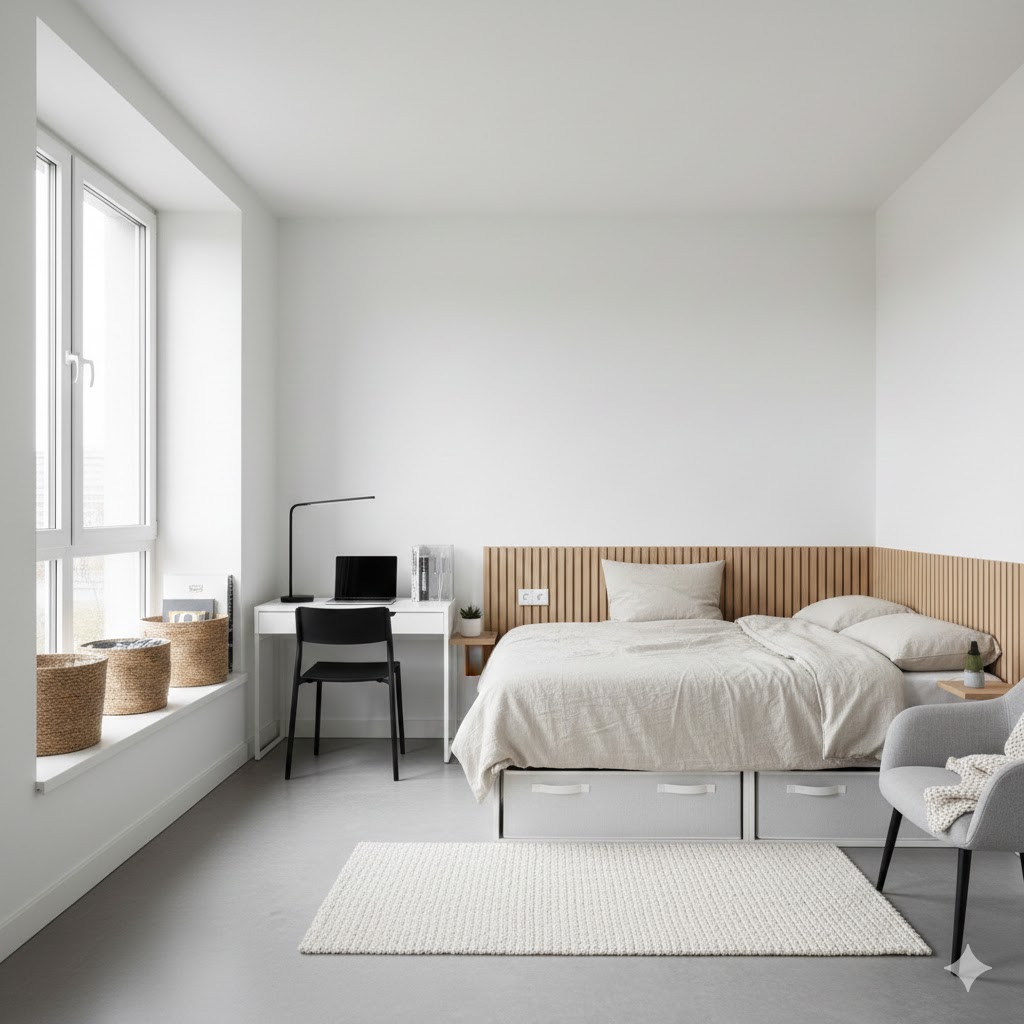
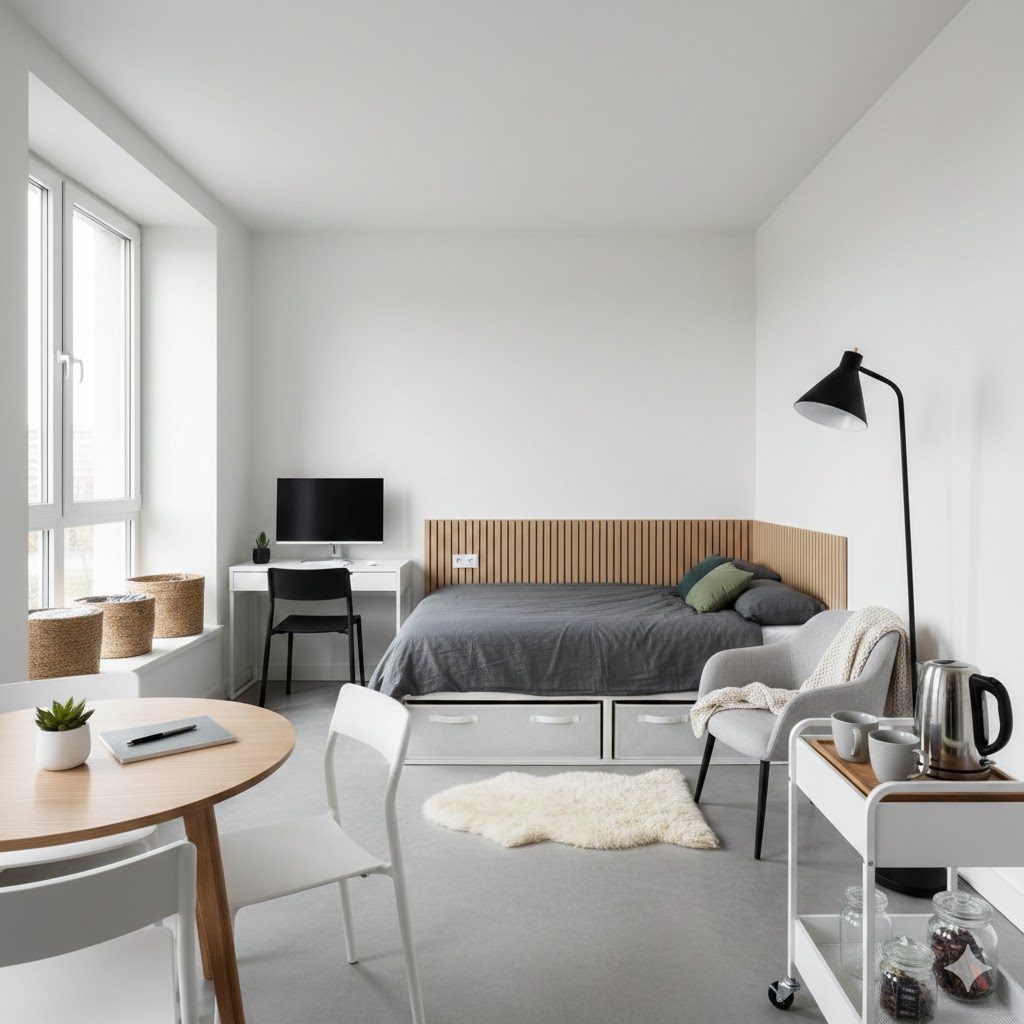
Start by choosing your main zones. The most important zones are the sleeping zone, the mini kitchen zone, the study or reading zone, and the storage zone. You do not need big space for each. You just need clear separation. Separation can be done with furniture placement, a rug, lighting, or a curtain. For example, a rug under the bed can mark the sleeping zone. A small table and chair beside the window can mark the study zone. A small shelf or trolley can mark the mini kitchen zone. When you mark zones, the room stops feeling like one random space and starts feeling like a small studio apartment.
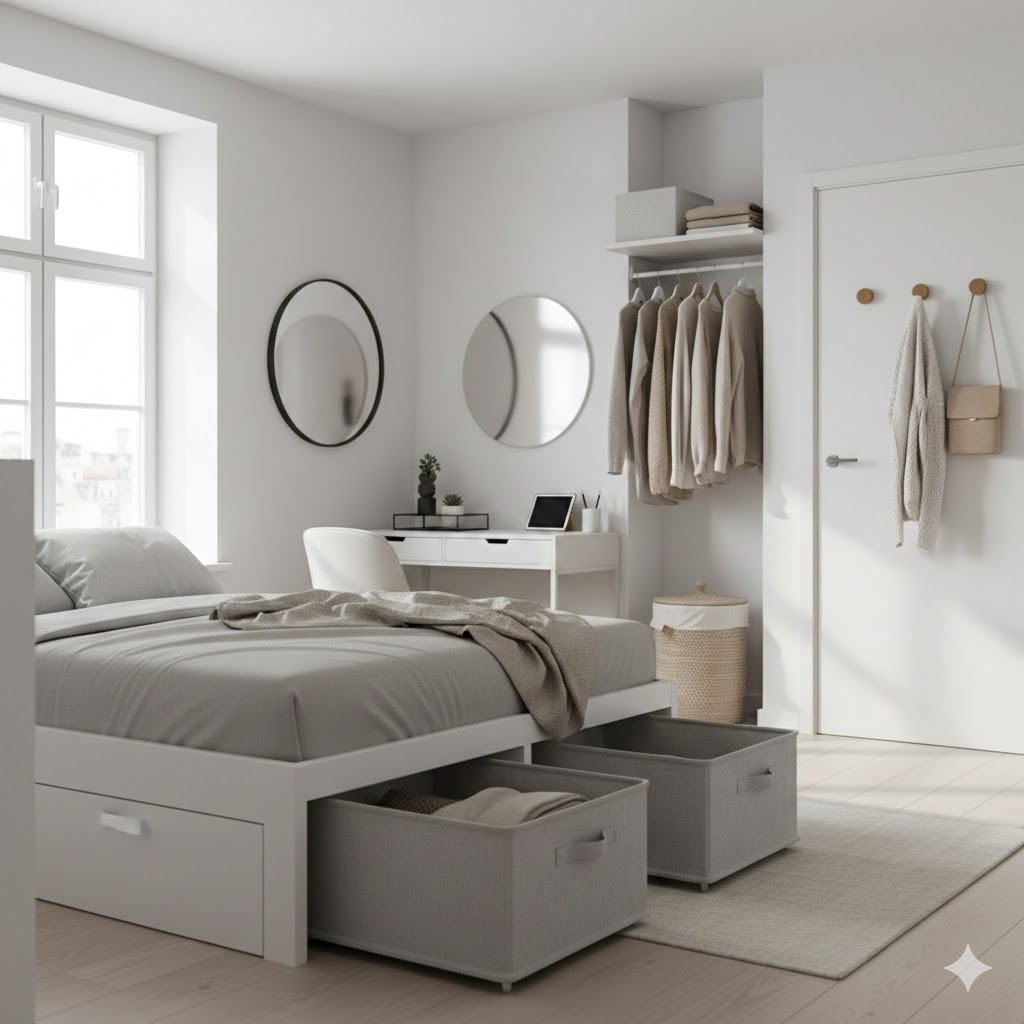
Now plan the layout in a way that reduces daily stress. Place the bed first because it is the biggest item. In most one-room spaces, the bed should go along the longest wall. If the bed is placed in the middle, it blocks movement and makes the room feel tiny. If the bed is against the wall, it opens space for walking and other zones. If you can, keep the bed close to a wall that is not directly facing the door, so the room feels more private and calm.
Next place the study zone. Study zone works best near natural light. Put a small desk or table near a window, if possible. If there is no window space, use a corner and add a desk lamp. Your study zone should not be on your bed. Studying on the bed makes your bed feel like a workspace. Then you cannot relax well when you lie down. It also makes the bed messy because books and devices stay there. A real study corner helps your focus and keeps your bed clean.
Then place the mini kitchen zone. If you are cooking inside your room, you must control mess and smell. The kitchen zone should be near ventilation, like a window, and not near your bed if you can avoid it. Even if you are not cooking heavy food, a simple tea and snack station still needs a zone, because cups and food items become clutter fast. A small trolley, a small shelf, or a small cabinet can hold your kettle, cups, and pantry items. This stops kitchen items from spreading to your bed and desk.
Now the reading or chill zone. In a small room, this can be very simple. It can be a single chair beside the bed, or a pillow corner with a small rug, or even the bed itself styled for sitting. The goal is to create a “rest mood” that is different from your study mood. If you have a small chair, put it with a small side table and a lamp. That small setup makes the room feel mature and cozy.
The final zone is storage. Storage is not a place. It is a system. If you do not create a storage system, every zone becomes storage and the room becomes messy. Use under-bed storage. Use wall hooks. Use a small wardrobe. Use baskets. Keep items hidden where possible. Hidden storage makes the room look cleaner and bigger.
Simple example: Bed against the longest wall with a rug. Desk by the window with a lamp. Small kitchen trolley near the window. One reading chair in the corner with a small light. Under-bed bins for storage.