Biophilic Maximalism Room Ideas That Blend Nature With Bold Interior Style

Biophilic Maximalism Room Ideas That Blend Nature With Bold Interior Style

Introduction

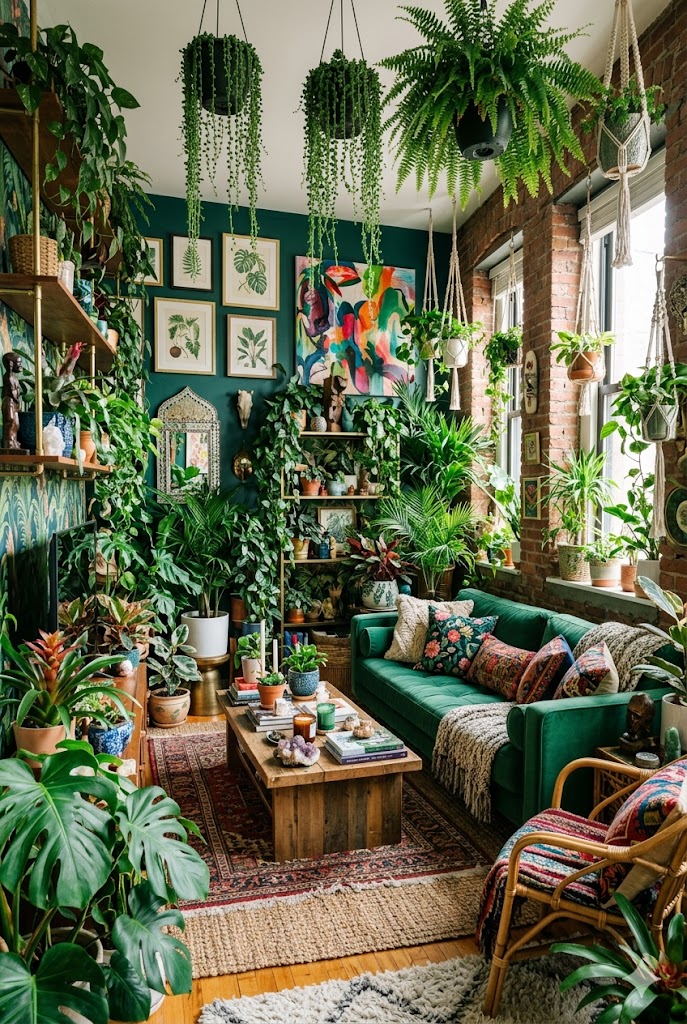
A biophilic maximalism room combines lots of indoor plants, bold colors, layered textures, and rich decor to create a vibrant space that feels full of life, nature, and personality.

1

What Is Biophilic Maximalism and Why It Feels So Alive

What Is Biophilic Maximalism and Why It Feels So Alive

Biophilic maximalism is a design style that mixes two strong ideas. The first is biophilic design, which means bringing nature inside the home. The second is maximalism, which means using many layers, colors, and decorative elements instead of keeping things simple.

When these two ideas come together, the result is a room that feels rich, full, and alive. Unlike minimal spaces that feel empty, a biophilic maximalism room is full of energy. It celebrates nature and creativity at the same time.

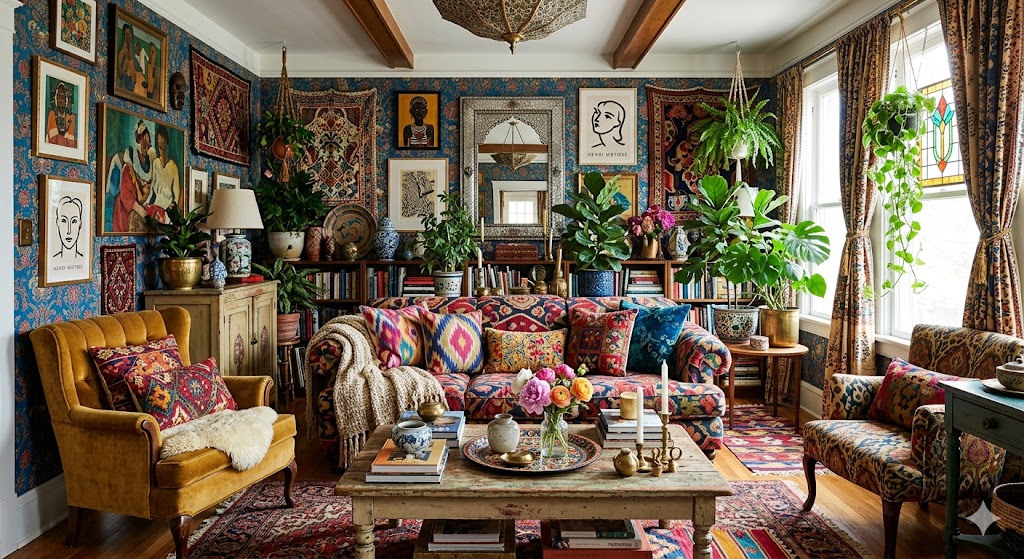
The most noticeable feature is the use of plants. Not just one or two plants, but many. Plants are placed on shelves, floors, walls, and even hanging from the ceiling. This creates a strong connection to nature.

Another key feature is bold decoration. Instead of plain walls, you may see patterns, artwork, or textured finishes. The room feels expressive and unique.

Colors are also very important. Earthy tones like green and brown are common, but they are often mixed with brighter colors like deep orange, mustard, or even jewel tones.

This style also focuses on comfort. Soft furniture, layered fabrics, and cozy corners make the room feel welcoming.

Biophilic maximalism is popular because it allows freedom. There are no strict rules. The goal is to create a space that feels natural, personal, and full of life.

Even though it uses many elements, balance is still important. Everything should feel connected rather than chaotic.

When done well, this style creates a room that feels both relaxing and exciting at the same time.
2

How to Layer Plants for a True Biophilic Effect

How to Layer Plants for a True Biophilic Effect

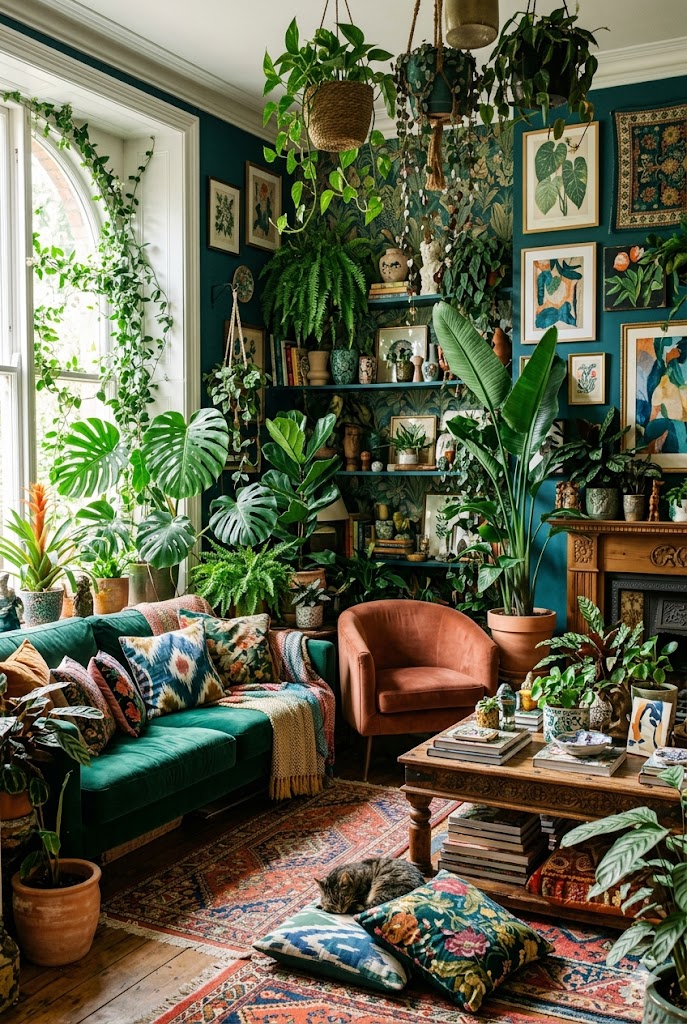
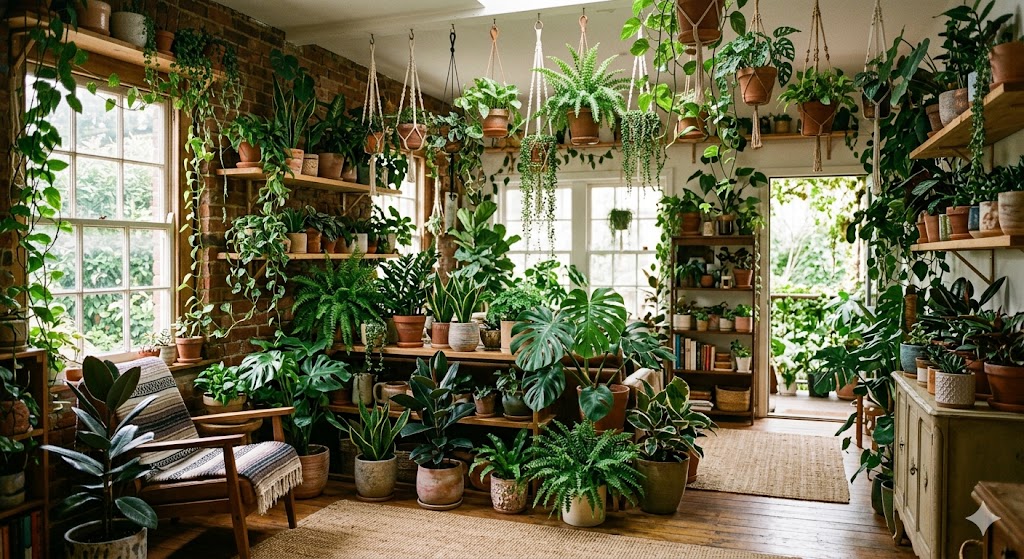
Plants are the heart of a biophilic maximalism room. The goal is not just to add greenery but to create a layered natural environment that surrounds the space.

Start with large floor plants. These plants fill empty corners and create a strong visual base. Plants with big leaves make a bold statement and instantly bring life into the room.

Next, add medium-sized plants on shelves, tables, or stands. These plants help spread greenery throughout the space.

Hanging plants are also important. They add height and create a cascading effect that makes the room feel more dynamic.

Wall-mounted planters can turn plain walls into living displays. This adds depth and texture to the room.

Mixing different types of plants creates variety. Some plants have large leaves, while others have small or trailing leaves. This variation makes the space more interesting.

Plant pots also play a role. Using different materials like ceramic, clay, or woven baskets adds texture.

Placement should feel natural. Plants should not look forced or too symmetrical. A slightly organic arrangement works best.

Lighting is important for plants. Placing them near windows helps them grow while also enhancing their appearance.

The goal is to make plants feel like a natural part of the room rather than just decoration.

When plants are layered correctly, the room feels like an indoor garden.

3

Using Bold Colors and Patterns Without Making the Room Feel Messy

Using Bold Colors and Patterns Without Making the Room Feel Messy

Maximalism is all about bold choices, but the challenge is to keep the room from feeling overwhelming. The key is to use colors and patterns in a balanced way.

Start with a base color. This could be a neutral tone or an earthy color like green or brown. This base helps anchor the room.

Then add accent colors. Bright colors like deep orange, mustard, or rich blue can be introduced through pillows, rugs, or artwork.

Patterns should be mixed carefully. Combining different patterns can create visual interest, but they should share similar colors to stay cohesive.

Walls can also be used creatively. Wallpaper with botanical prints or textured finishes can enhance the natural theme.

Furniture can include bold colors or unique shapes. This adds personality to the space.

Textures are just as important as colors. Soft fabrics, woven materials, and natural finishes add depth.

The goal is to create layers without clutter. Each element should have a purpose.

Even though the room is full, it should still feel comfortable and organized.

By balancing bold choices with thoughtful design, the room becomes vibrant without feeling chaotic.

4

Furniture and Decor That Complete the Biophilic Maximalism Look

Furniture and decor bring everything together in a biophilic maximalism room. The right pieces create comfort while supporting the overall style.

Furniture should feel cozy and inviting. Sofas, chairs, and beds with soft fabrics help create a comfortable environment.

Natural materials work best. Wood, rattan, and woven elements connect the room to nature.

Decor items should reflect personality. Artwork, sculptures, and decorative objects add character to the space.

Layering is important. Rugs, throws, and cushions create a rich and comfortable look.

Lighting should be warm and soft. Lamps and string lights enhance the cozy atmosphere.

Mirrors can also be used to reflect light and make the space feel larger.

Storage should be organized to prevent clutter. Even in a maximalist space, cleanliness is important.

Small details make a big difference. Items like books, candles, or decorative trays add finishing touches.

The goal is to create a space that feels full but still comfortable.

When furniture and decor are chosen carefully, the room becomes a vibrant and relaxing retreat.

5

FAQs

What is biophilic maximalism?
It is a design style that mixes nature with bold decor.

Do I need many plants?
Yes, plants are a key part of the style.

Can small rooms use this design?
Yes, with careful arrangement.

What colors work best?
Earthy tones with bold accents.

Is this style expensive?
It can be done on different budgets.

How do I avoid clutter?
Keep items organized and balanced.