Wardrobe Organization Ideas: How to Set Up a Bedroom Wardrobe That Stays Neat

Wardrobe Organization Ideas: How to Set Up a Bedroom Wardrobe That Stays Neat

Introduction

The best bedroom wardrobe setup ideas are simple: give every item a clear place, group similar clothes together, use easy storage for small items, and stop clutter from returning. When your wardrobe is set up well, your whole bedroom looks cleaner because clothes stop spreading around the room. This guide teaches a beginner-friendly wardrobe setup that stays neat.

1

Start With Space Planning (So Your Wardrobe Setup Does Not Fail Later)

Start With Space Planning (So Your Wardrobe Setup Does Not Fail Later)

A wardrobe stays neat when the setup matches your daily life. Many people fail because they copy a “pretty wardrobe picture” that does not fit their real habits. So the first step is space planning. Space planning just means you decide what goes where before you start arranging. You look at the wardrobe and decide which side is for hanging clothes, which part is for folded clothes, which part is for shoes, and where small items will live. This makes the wardrobe easy to use, and an easy wardrobe stays tidy. A hard wardrobe becomes messy again.

First, measure your reality. Ask yourself what you wear most. If you mostly wear shirts and trousers, you need more hanging space. If you mostly wear t-shirts, jeans, and casual wear, you need more shelves or folding space. If you wear many long items like gowns, long jackets, or traditional outfits, you need a long hanging section. If you ignore this, your wardrobe will look neat for one day and messy forever. The future-proof trick is to design the wardrobe for your “most common clothes,” not for your special clothes.

Next, create zones inside the wardrobe. A zone is just a section with one job. The best zones are daily clothes, work or school clothes, special clothes, shoes, and accessories. Daily clothes should be placed at the easiest height, so you can reach them without stress. Special clothes can go higher or deeper because you do not touch them often. Shoes should have their own space because shoes on clothes shelves create dirt and ruin the clean feel. Even if you have no shoe rack inside, use a simple box system or a bottom shelf that is only for shoes.

Then think about the bedroom. Your wardrobe should not fight the bedroom layout. If the wardrobe door hits the bed, you will not enjoy using it. If it blocks walking space, you will feel irritated daily and the wardrobe area will turn into a dumping place. So give the wardrobe area breathing space. If your bedroom is small, keep the area around the wardrobe empty. Do not place random chairs, baskets, or boxes in front of it. The more open the area is, the easier it is to keep the wardrobe neat.

Another important part of space planning is “overflow control.” Overflow is the extra stuff that does not fit, like old clothes, random bags, unused shoes, and items you keep “just in case.” These items destroy a wardrobe setup because they steal space from the clothes you actually wear. So create one overflow area. It can be one box at the top of the wardrobe or one storage bin under the bed. This stops random items from taking over your main wardrobe area. When you do this, your wardrobe becomes easier to use and your setup lasts longer.

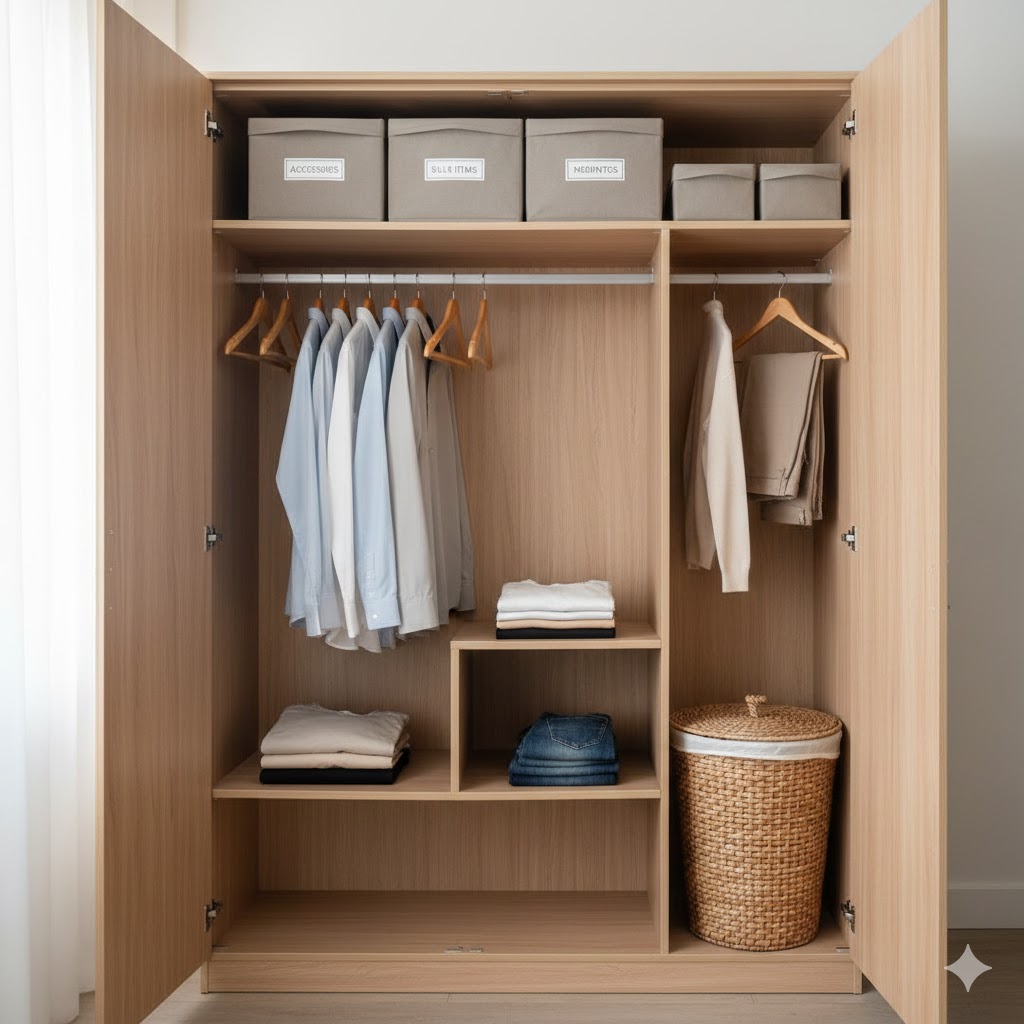
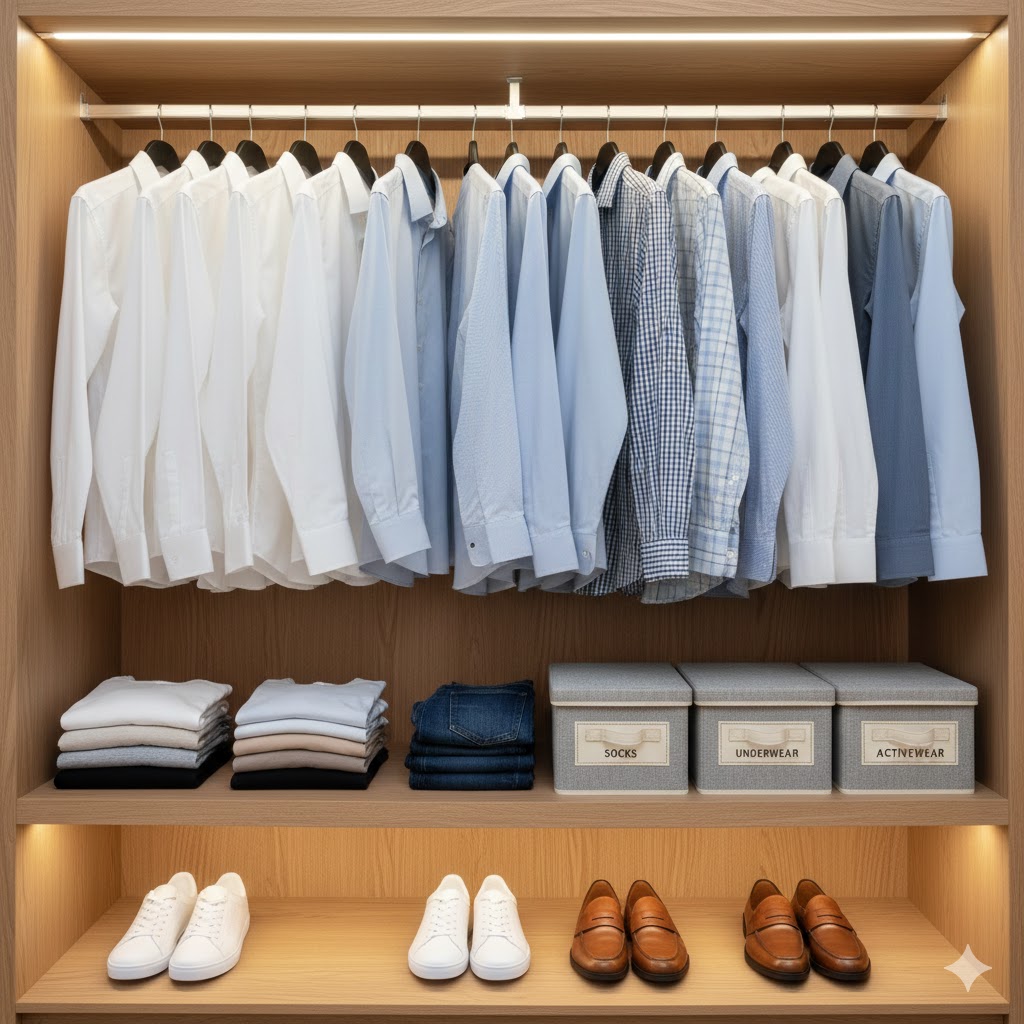
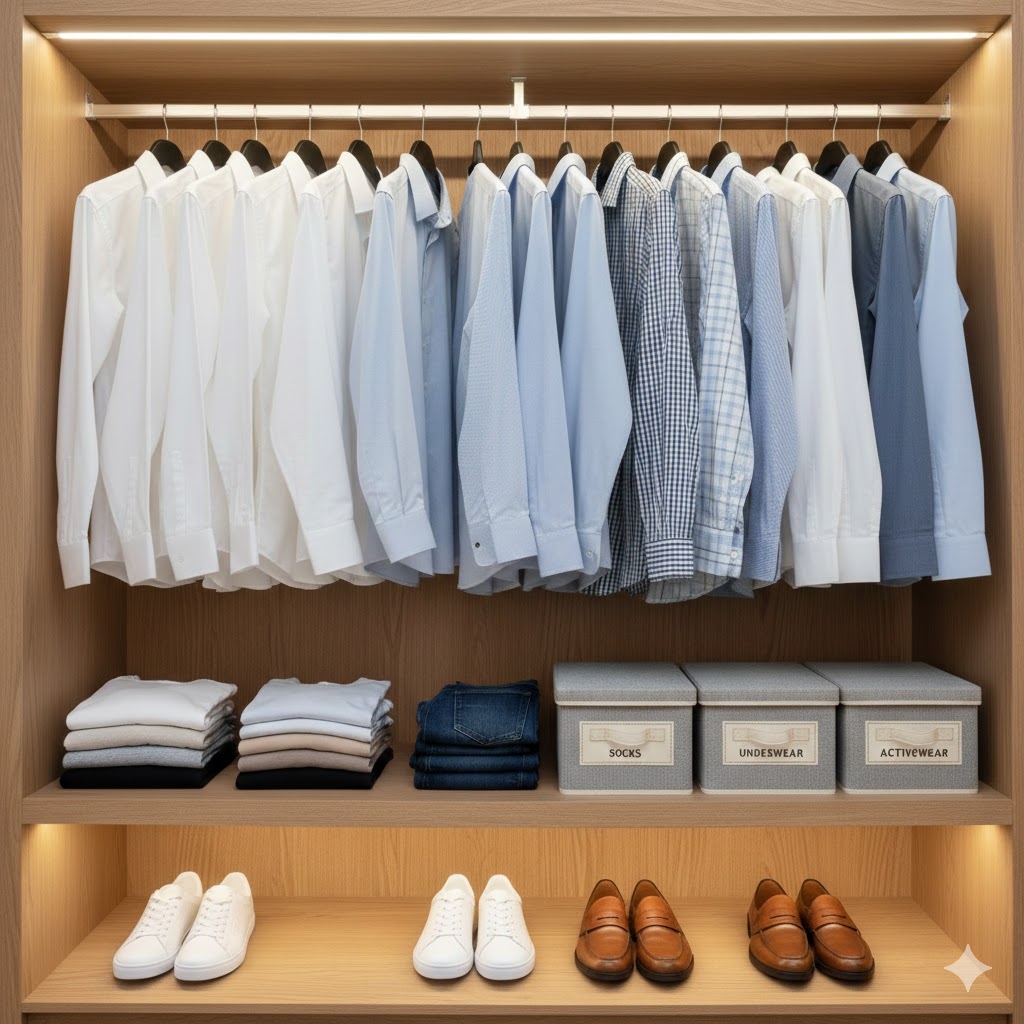
Simple example: Daily clothes on the middle hanging rail, folded casual wear on the middle shelf, shoes on the bottom shelf only, bags on the top shelf, and one overflow box for random items.
2

Arrange Clothes the “Easy Way” (So You Can Find Things Fast and Put Them Back Fast)

Arrange Clothes the “Easy Way” (So You Can Find Things Fast and Put Them Back Fast)

A wardrobe setup is successful when it is fast. Fast to find clothes. Fast to put clothes back. Slow systems fail because people stop following them. The easiest method is grouping and consistency. Grouping means you keep similar items together. Consistency means you always return items to the same place. This is how wardrobes stay neat.

Start by separating your clothes into simple groups. Work clothes in one group, casual clothes in one group, and special clothes in one group. If you want more detail, you can split by type, like shirts, trousers, dresses, and jackets. But do not over-complicate it. The goal is speed. Once you have groups, place the most-used group in the most reachable area. For most people, that is casual and daily wear. So put those at eye level. Clothes you rarely wear can go up high or deep inside. When your daily clothes are easy to reach, you stop pulling everything out to find one item. That is what keeps the wardrobe neat.

Now handle hanging clothes. Hanging makes clothes look clean and reduces wrinkles. Use matching hangers if possible. Matching hangers instantly makes a wardrobe look organized. If you cannot buy new hangers, at least use the same type of hanger for the same clothes. For example, hang all shirts on the same hanger style. Arrange hanging clothes in a clean order. You can do it by color (light to dark), or by type (shirts then jackets then long items). Color order looks beautiful, but type order is faster for most beginners. You can choose either. The important thing is that it is consistent.

Now folded clothes. Folding can look messy when stacks fall. The trick is smaller stacks. Do not build tall towers of clothes. Make short stacks and use dividers if you can. If you have drawers, drawers are better than open shelves because they hide mess. For shelves, use boxes or baskets for small clothing like underwear, socks, and gym items. This makes the wardrobe look clean and stops small items from spreading. If you have many t-shirts, use the “front-facing” fold style so you can see each shirt without destroying the stack. You do not need perfect folding. You need a fold that stays stable.

Also, set a simple “return rule.” The rule is: if you take something out and you do not wear it, put it back immediately. Many wardrobes get messy because people try clothes, drop them, and promise to fix later. Later never comes. If your wardrobe is designed for speed, you can return items quickly and stay neat.

Your wardrobe setup also needs a “dirty clothes system.” If dirty clothes enter the wardrobe, everything fails. So keep dirty clothes outside the wardrobe, inside one laundry basket. If you have half-worn clothes that you want to wear again, give them one place, like one hook behind the door or one small basket, not the wardrobe shelves. This keeps clean clothes clean and keeps the wardrobe looking fresh.

Simple example: Hang shirts and jackets on matching hangers, fold jeans into short stacks, store socks and underwear inside one box, and keep dirty clothes in a basket outside the wardrobe.

3

Shoe, Bag, and Accessories Setup (The Hidden Part That Makes Wardrobes Look Messy)

Shoe, Bag, and Accessories Setup (The Hidden Part That Makes Wardrobes Look Messy)

Many wardrobes look neat until you open the bottom and top shelves. That is where shoes, bags, belts, and random items live. This part is important because accessories create visual mess fast. A clean wardrobe setup gives accessories a simple home. When accessories have a home, you stop throwing them anywhere.

Start with shoes. Shoes should live on the lowest part of the wardrobe or in a shoe rack near the wardrobe. Shoes do not belong on the same shelves as clothes because they carry dust. If you only have one wardrobe, assign the bottom shelf as the shoe zone. Keep shoes in pairs and face them the same direction. If you have many shoes, use clear shoe boxes or stackable shoe containers. Clear boxes are helpful because you can see what is inside quickly. If you cannot buy boxes, you can still use one simple rule: keep only your most-used shoes in the wardrobe and store the rest elsewhere. Too many shoes in the wardrobe makes it feel crowded and messy.

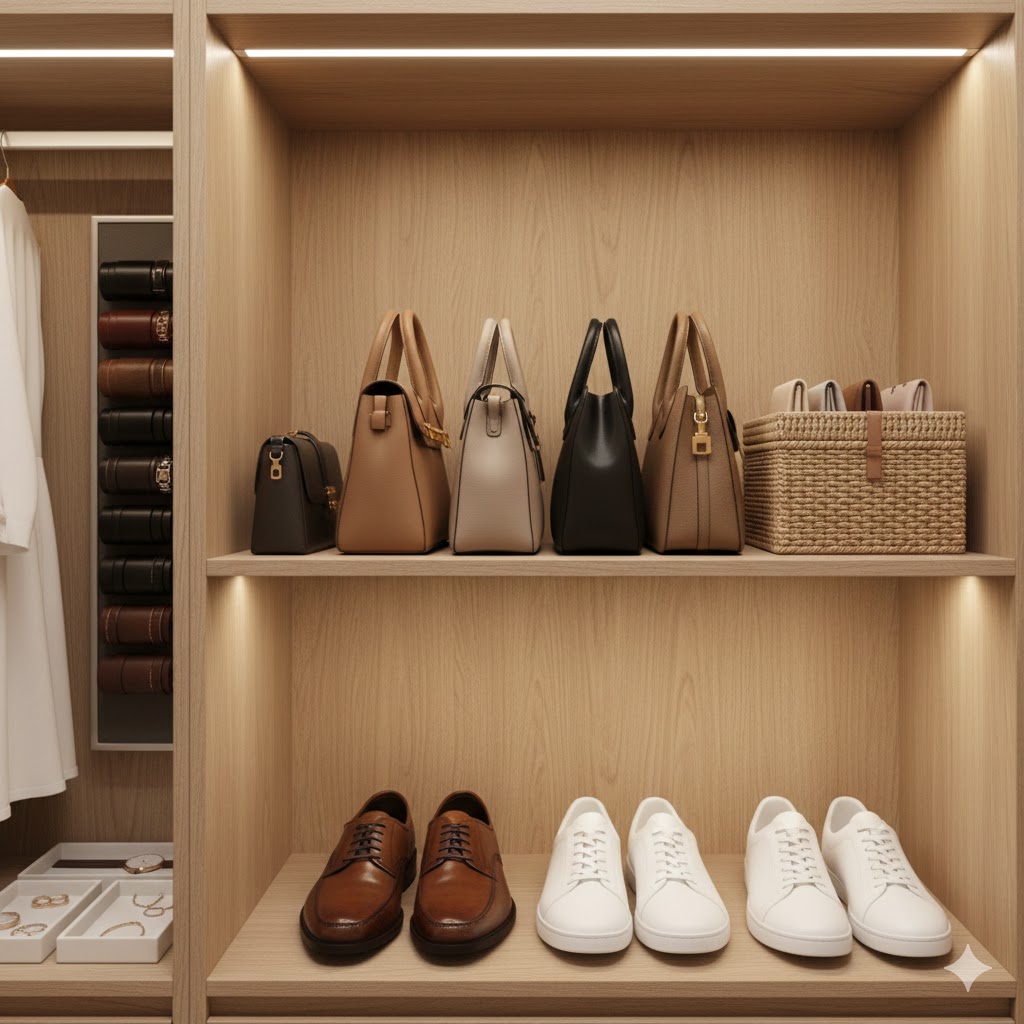
Now bags. Bags should not be thrown on top of clothes because they fall and distort. The clean way is to keep bags on the top shelf. If you have structured handbags, you can stand them upright. If you have soft bags, put them in one basket or one large box. If you want it to look premium, stuff the bag lightly with tissue or cloth so it holds shape. This small detail makes your wardrobe look neat and “store-like.”

Next is accessories like belts, ties, scarves, jewelry, caps, and watches. These items become messy because they are small. The solution is containers and hooks. A simple drawer organizer works well for watches and jewelry. A small box works for belts. A hanging hook strip works for ties and scarves. If your wardrobe has a door, you can use the inside of the door for hooks. This saves space and keeps items visible. But keep it controlled. If you hang too many items on the door, it looks crowded. Choose only daily accessories for the door. Store the rest in a box.

Now the “random stuff” problem. Many wardrobes contain chargers, old receipts, papers, perfumes, creams, and small things that do not belong. This is what makes wardrobes messy even when clothes are neat. The fix is a “small items box.” Put one box on a top shelf. Everything that does not have a home goes into that box. This stops small items from spreading. Then once a week or once a month, you sort that box. This is how you control clutter without stress.

Also, keep a simple “season system.” If you have seasonal clothing like heavy jackets or special outfits, store them higher or in under-bed storage. This gives your daily wardrobe more breathing space. A wardrobe with breathing space stays neat longer because it is not overstuffed.

Simple example: Shoes on the bottom shelf in pairs, bags on the top shelf in one basket, belts in one box, and daily accessories on one hook strip.

4

Make It Stay Neat (Simple Habits That Stop the Wardrobe From Becoming Messy Again)

Make It Stay Neat (Simple Habits That Stop the Wardrobe From Becoming Messy Again)

A wardrobe setup is not only how you arrange items one day. It is also what you do after that day. The real goal is a wardrobe that stays neat even when life is busy. The best way to do that is to design easy habits that take minutes, not hours. If your system is hard, you will stop using it. So your wardrobe must be easy and forgiving.

First, set a “one-touch rule.” The one-touch rule means you touch an item once, then it goes to the right place. If you remove a shirt and decide not to wear it, you return it immediately. If you take off trousers, you either hang them back or put them in the laundry basket. This simple rule stops piles from forming. Most mess comes from piles. Piles form when you delay returning items. So the one-touch rule is the fastest way to stay clean.

Next, keep the wardrobe from being over-full. An over-full wardrobe always becomes messy because you cannot remove one item without pulling five. If your wardrobe is tight, remove what you do not wear. You do not have to throw it away. You can pack it in a storage bag, donate it, or keep it in an overflow bin. But your daily wardrobe should have space. Space is what keeps it neat. When you see space, you automatically return items properly because it feels easy.

Now add a simple weekly reset. Once a week, take 10 minutes. Put shoes back in pairs. Put hanging clothes back in the correct zone. Fold any messy piles. Return accessories to their box. This weekly reset keeps small mess from becoming big mess. It is easier to do small cleaning weekly than to do full cleaning monthly.

Also, control laundry. Laundry is the biggest enemy of a wardrobe. Keep one laundry basket and always use it. If your basket is too small, you will overflow and clothes will end up on chairs. If you have half-worn clothes, give them a separate place. Do not mix them with clean clothes. Half-worn clothes are not dirty enough for laundry, but they are not clean enough for the wardrobe. That is why people drop them everywhere. Solve it by creating one hook area behind the door or one small basket for half-worn clothes. This one detail can keep your room clean daily.

Another habit is “buying control.” If you keep buying clothes but you do not increase wardrobe space, your setup will collapse. So before you buy new clothing, check the wardrobe space. If it is full, remove something old. This keeps your system stable.

Finally, keep it simple. Do not chase perfection. A neat wardrobe is not about perfect folding. It is about fast return and clear zones. When you keep zones, boxes, and a weekly reset, your wardrobe stays neat without stress, and your bedroom looks cleaner too.

Simple example: One-touch rule daily, 10-minute reset weekly, and one overflow bin for extra items.

5

Simple Examples

If your wardrobe is messy, remove half the items, then rebuild zones for daily clothes first. If shoes are everywhere, give shoes one bottom shelf only. If small items scatter, use one tray and one box system. If your wardrobe becomes messy again after one week, your system is too hard, so reduce it to fewer zones and fewer steps.

6

FAQs (Short Answers)

FAQ 1: What is the best way to start wardrobe organization?
Remove everything, sort by type, then create zones before putting items back.

FAQ 2: How do I stop my wardrobe from getting messy again?
Use easy zones, a laundry basket, and a 10-minute weekly reset.

FAQ 3: Should I organize clothes by color or by type?
Type is faster for beginners. Color looks nice if you can maintain it.

FAQ 4: What should I do with clothes I rarely wear?
Store them in an overflow bin or under-bed storage.

FAQ 5: How do I store underwear and socks neatly?
Use one small box or drawer organizer so they do not spread.

FAQ 6: Where should shoes go in the wardrobe?
Bottom shelf only, kept in pairs.

FAQ 7: How do I handle half-worn clothes?
Use one hook area or one basket, not the wardrobe shelves.

FAQ 8: What makes a wardrobe look expensive?
Matching hangers, clear zones, and visible empty space.

7

Final Summary Paragraph

The best bedroom wardrobe setup ideas are simple: plan zones first, arrange clothes in easy groups, give shoes and accessories their own homes, and use small habits that stop clutter from returning. When your wardrobe is easy to use, it stays neat, and your whole bedroom looks cleaner every day.