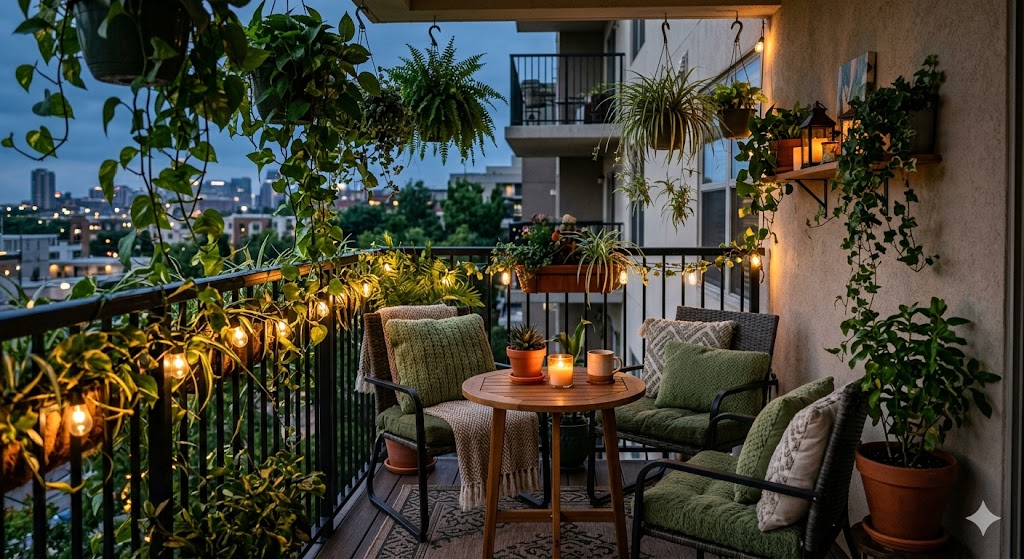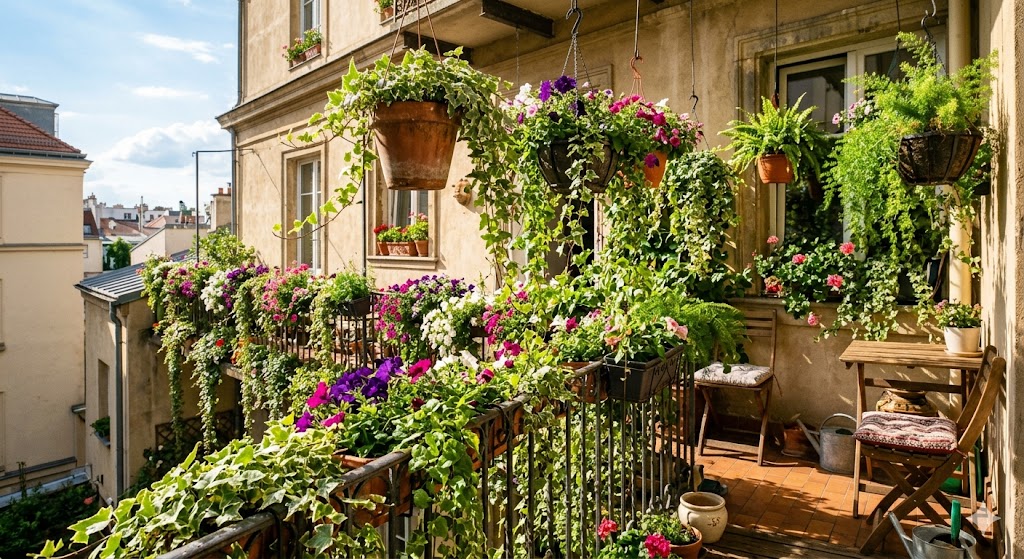
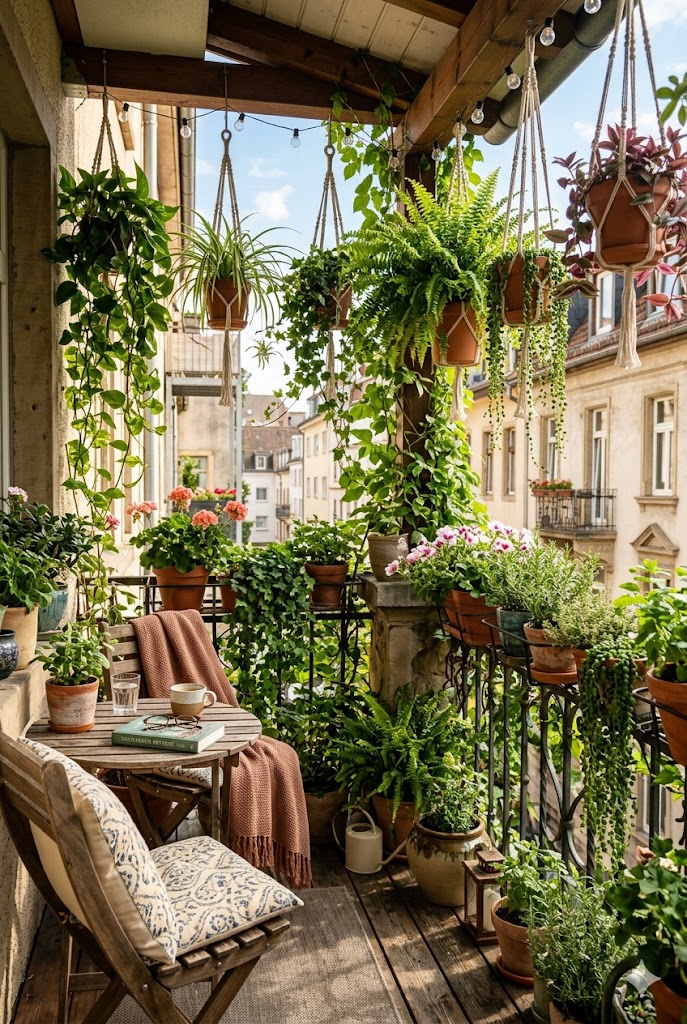
Balconies often have limited space, which makes traditional gardening difficult. Large pots placed on the floor can quickly make the area feel crowded. Hanging plants solve this problem by using vertical space instead of floor space.
When plants hang from the ceiling, railings, or wall hooks, they create layers of greenery that make the balcony feel fuller and more vibrant. This vertical garden effect makes even the smallest balcony appear like a lush outdoor retreat.
Another advantage of hanging plants is that they create a natural atmosphere. When leaves and vines gently hang downward, they soften the structure of the balcony and make the space feel more connected to nature.
Many homeowners enjoy sitting on their balcony to relax after a long day. Hanging plants help create a peaceful environment that encourages relaxation. The gentle movement of leaves in the breeze adds to the calming effect.
Hanging plants also allow better sunlight exposure for certain types of plants. When plants are elevated, they can receive more light compared to plants placed on the ground where shadows may block sunlight.
Another benefit is improved air circulation. Plants hanging in open air often grow healthier because air can flow freely around their leaves.
Hanging plants can also add privacy to balconies. When several plants hang near the railing, they form a natural screen that partially blocks outside views while still allowing fresh air and light.
In addition, hanging plants add visual depth to the balcony. Instead of a flat design with everything on the floor, the space becomes layered with greenery at different heights.
Because of these advantages, hanging plants have become one of the most popular ideas for balcony gardens.